
In today’s ever-competitive landscape, the prowess of your marketing strategy hinges on the sharpness of the tools you employ. With predictive lead scoring, marketing automation, conversion rate optimization, and effective customer acquisition strategies at your disposal, you are well-equipped to not just meet but exceed your business objectives. These advanced techniques empower you to sift through the multitude of digital interactions and zero in on the leads most likely to catalyze growth for your enterprise.
Imagine having the ability to decipher which of your leads is just a flicker of interest and which one is poised to ignite into a lasting customer relationship. That’s the promise of adaptive lead scoring—it sorts through the noise to highlight the signals that matter. As you refine your approach with state-of-the-art analytical tools, your marketing efforts become not just streamlined, but more dynamic and insightful, setting the stage for conversion rates that will redefine your ROI narratives.
Whether you’re plotting your next campaign or seeking to optimize existing channels, the value of coupling robust analytics with intuitive marketing systems cannot be overstated. From garnering pivotal insights to automating response pathways, your marketing automation platform is an essential ally in this adventure. Let’s embark on this journey of dissecting the essence of advanced lead scoring and how it can revolutionize your approach to securing valuable customers.
Key Takeaways
- Adopt advanced lead scoring techniques to enhance your marketing automation and boost lead conversion rates.
- Leverage predictive analytics to identify the highest potential leads with greater accuracy.
- Understand the impact of customer acquisition strategies in the context of digital marketing’s competitive landscape.
- Optimize your ROI by effectively prioritizing leads and personalizing marketing outreach.
- Utilize market-leading tools and platforms to automate complex processes within your sales funnel.
- Stay ahead in the game by leveraging data-driven insights to refine and perfect your marketing campaigns.
The Fundamentals of Lead Scoring and Its Impact on Marketing Automation
Embarking on the journey to optimize your marketing strategy, you will inevitably encounter lead qualification techniques crucial for business growth. At the heart of this journey is lead scoring, an analytical framework designed to prioritize and streamline your sales process. It’s time to unravel how this system works and its transformative effect on marketing effectiveness. As you tune into the nuances of lead scoring, you’ll realize that it’s not just about number crunching—it’s a strategic move towards smarter marketing.
The nexus between lead scoring tools and marketing automation forms an efficient assembly line that propels leads from initial interest to confirmed customers. So, how does this assembly line operate to ensure maximum lead conversion optimization? Let’s delve into these mechanisms and understand why they are pivotal for the modern marketer’s toolkit.
Understanding the Lead Scoring Process
You, the attentive marketer, know that not all leads are created equal. Lead scoring assigns a numerical significance to each prospect, indicating their purchase potential. As leads engage with your content, visit your pricing page, or download your latest whitepaper, they are no longer faceless entities in a vast digital sea. Instead, they become focal points of interest, their scores rising with each interaction, guiding your sales force to the most promising opportunities.
The Role of Marketing Automation in Refining Lead Scoring
Step onto the showroom floor of modern marketing and witness the sleek efficiency of marketing automation. Here, lead scoring tools are the workhorses, keeping the operation smooth and synchronous. They capture lead data, automate communication flows, and assist in nurturing leads until they are sales-ready. The data that percolates through this automated framework refines lead scoring, ensuring that the handoff to sales is elegantly timed—never premature, never too late.
By understanding the interplay between lead scoring and marketing automation, you have the power to direct your marketing orchestra, amplifying the symphony of conversions. As you become more adept in these techniques, you’ll see your marketing effectiveness soar—an outcome echoed in the surging numbers of your qualified leads and a testament to the potency of well-honed lead qualification techniques.
The Intersection of Behavior and Demographics in Lead Scoring
Lead scoring, a critical component in the architecture of your sales funnel optimization, hinges not solely on demographics but also on a rich tapestry of behavioral data. Integrating insights such as website engagement, email responsiveness, and content interaction with traditional demographics lays the foundation for effective customer profiling. This fusion of information delivers a robust lens through which you can tailor and target your marketing campaigns more effectively.
As you aim to deepen your market segmentation strategies, you must recognize that behavior and demographics are not just intersecting lines but intertwined threads. Together, they provide a full spectrum view of your prospect’s journey, uniquely qualifying each lead with precision. Welcome to a world where personalized marketing is not a buzzword, but a bespoke reality, transforming each campaign into a targeted conversation with potential buyers at the right place and the right time.
Imagine mapping out a digital footprint that mirrors your ideal customer’s portrait. Your marketing machinery now becomes adept at predicting needs before they’re expressed, allowing you to craft campaigns with laser-focused messaging that resonates with your audience. Herein lies the secret sauce for not only attracting leads but transforming them into lasting customer relationships.
-
The anatomical study of lead behavior reveals patterns, bringing to light the ‘when’ and ‘how’ of lead nurturing.
-
Demographic analytics serve as a compass, guiding the direction of content personalization and offer alignment.
-
Together, they usher in an era of hyper-targeted marketing campaigns that not only speak to a lead’s industry or role but engage them in a dialogue based on their digital body language.
Effective lead scoring is akin to being a digital empath, where you sense and respond to the nuanced needs of your prospects. You’re no longer shouting into the void but whispering directly into the ears of those tuned into your frequency—this is the art and science of modern customer engagement.
In the agile dance of capturing leads, let your steps be guided by the rhythm of behavior complemented by the melody of demographics. Through this harmonious approach, you craft more than campaigns; you curate experiences. Harness this confluence, where every click, every download, and every opened email informs your lead score, setting the stage for targeted marketing campaigns with unprecedented conversion potential.

Ultimately, your mastery of these concepts elevates lead scoring from a mere function of marketing to a cornerstone of sales funnel optimization. As you refine your approach, the lines between marketing and sales blur, leading to a seamless continuum where the right message finds the right person at precisely the right moment.
Integrating Predictive Analytics into Lead Scoring Models
As you evolve your lead scoring strategies, predictive analytics emerges as a game-changer, enhancing the traditional methodologies with the power of AI. By harnessing the wealth of data at your fingertips, you create a lead scoring model that not only reflects past interactions but anticipates future behaviors. Let’s explore the transformative impact of AI on predictive lead scoring and the real-world success stories that illustrate its remarkable potential in customer behavior analysis and lead scoring efficiency.
Utilizing AI for Predictive Lead Scoring
AI-enhanced marketing takes the guesswork out of your lead scoring process. Algorithms and machine learning dive into the historical data of your leads, identifying patterns you might miss with the naked eye. This technology predicts which leads are most likely to engage, upgrade, or buy, increasing the precision of your marketing efforts and ensuring that high-potential leads receive the attention they deserve.
Case Studies: Success with Predictive Scoring
Real-world applications of predictive analytics demonstrate its profound impact on conversion rates. Take Hubspot as a hallmark example; their integration of predictive lead scoring models into their marketing automation has elevated their ability to personalize content, greatly enhancing the relevance for the user. This strategy feeds into an uplift in engagement, nurturing leads more effectively toward conversion and significantly improving lead scoring efficiency.
Lead Scoring Techniques Beyond the Basics
As you delve deeper into the realm of lead nurturing, you’ll quickly find that the traditional methods of scoring leads based on demographics alone are no longer sufficient. To truly excel in today’s digital landscape, tapping into advanced scoring models and leveraging the full spectrum of user engagement tracking is essential. This pivot not only sharpens your focus but also turbocharges your sales process automation, solidifying your strategy in the ever-evolving marketing arena.

Behavioral Lead Scoring Insights
Digital body language—like the pages your leads visit, the emails they open, and their activity on social media—tells a more nuanced story than static demographic data ever could. Lead scoring that incorporates such user engagement signals provides a dynamic picture of your leads’ interest levels and intention, allowing your marketing and sales teams to tailor their approaches for peak effectiveness. It’s about crafting a system that listens and responds to the digital cues of your prospects.
Enhancing Lead Scoring with Machine Learning
Machine learning takes your refined lead nurturing strategy a step further by continuously analyzing and adapting your scoring models in real-time. Cultivated from vast datasets, these intelligent systems learn from patterns of lead behavior to anticipate their next move, paving the way for unprecedented personalization and engagement strategies. Embrace machine learning to breathe life into your lead scoring tactics; it evolves as your audience does, ensuring your sales team is always one step ahead.
-
Focus on key digital interactions such as email opens, webinar participation, and social media activity to score and segment leads with greater accuracy.
-
Leverage advanced scoring models powered by machine learning for dynamic adjustment to lead scoring criteria based on real-time engagement.
-
Automate your sales process with cutting-edge tools ensuring leads are moved through the funnel efficiently, freeing up precious time for personalized outreach.
By incorporating these informed strategies into your marketing arsenal, you can ensure that every lead is scored with an advanced level of precision. This not only nurtures the potential customer through their journey but also aligns sales and marketing efforts, smoothing the path from an initial expression of interest to a long-term, profitable relationship.
Aligning Sales and Marketing with Effective Lead Scoring Strategies
As businesses strive for efficiency and growth, the alignment of sales and marketing teams becomes paramount, specifically when it comes to managing your sales funnel alignment. Your lead scoring strategies can serve as the pivotal point of synergy between these two functions, fostering a culture of seamless marketing-sales collaboration. By implementing strategic lead management, your team not only enhances the lead-to-customer conversion rates but also sets a solid foundation for unanimous movement towards common business objectives. Let’s explore some steps to achieve this alignment.
Step 1: Establish Common Lead Qualification Metrics
To initiate a synchronized approach, your sales and marketing teams need to converge on the criteria that define what a qualified lead looks like. This involves transparent communication about the characteristics and behaviors that indicate a lead’s readiness to progress through the sales funnel. It’s a strategic move geared towards clarifying expectations and responsibilities across departments.
Step 2: Develop a Shared Lead Scoring Model
Once the criteria have been agreed upon, together create a lead scoring model that encapsulates these metrics. Both sales and marketing teams should have input into the model design, ensuring that it reflects the shared understanding and goals for lead qualification.
Step 3: Continuous Communication and Feedback
For the lead scoring system to be effective, constant communication between marketing and sales is essential. This allows for feedback on the lead quality and the opportunity for continual fine-tuning of the scoring model based on real-world sales outcomes.
Step 4: Integration of Marketing Automation Tools
Use marketing automation tools to manage and monitor lead scores efficiently. These tools enable the consistent application of the lead scoring model across all potential customers, ensuring sales representatives focus their efforts on leads most likely to convert.
Step 5: Regular Performance Review
Conduct regular reviews of how well the lead scoring system is working in terms of the quality of leads passed to sales and the conversion rates that follow. These meetings should be constructive, using data to inform strategies and operations on both sides.
By aligning your sales funnel and solidifying marketing-sales collaboration, lead scoring becomes an indispensable strategy in your quest to enhance lead-to-customer conversion. Thoughtful, strategic lead management not only unifies sales and marketing but also puts your teams on a trajectory towards improved efficiency and better results.
-
Define what a marketing qualified lead (MQL) and a sales qualified lead (SQL) mean for your specific business context.
-
Agree on the indicators that signal lead readiness for sales engagement.
-
Utilize lead-to-customer conversion metrics to gauge the effectiveness of the lead scoring model.
-
Execute collaborative planning sessions to determine how best to manage and nurture leads at each stage of the sales funnel.
-
Invest in strategic lead management practices to ensure a healthy pipeline of leads that translates into sales success.
By following these steps studiously, you build not just a mechanism but a robust ecosystem where sales and marketing operate in concert. The ultimate goal? A frictionless journey for your leads, culminating in conversion, customer satisfaction, and repeat business — all benchmarks of a thriving company.
Lead Scoring Tools for Automating Your Marketing Funnel
As you chart the course for a more efficient marketing strategy, consider the pivotal role of lead scoring tools. These technological marvels streamline the complexities of your marketing funnel, enabling automated lead management with impressive accuracy and speed. The likes of Marketo, HubSpot, and Eloqua take center stage, offering marketing automation platforms endowed with comprehensive CRM integration capabilities, workflow automation, and robust analytics — all designed to enhance your lead qualification process from initial capture to ultimate conversion.
Embarking on the selection of an ideal lead scoring software demands a profound understanding of your sales process and the nuances of your prospects and customers. It is not merely about choice, but about aligning your business’s unique requirements with the distinct features of these platforms. Your determination in pinpointing the right tool — one that furnishes seamless integration, intelligent workflow automation, and technology-driven lead scoring — is crucial in cultivating a marketing funnel that operates like a well-oiled machine.
- Identify the functional requirements of your sales and marketing teams for effective lead management.
- Assess the compatibility of software features with your existing CRM and the ease of integration.
- Look for platforms that endorse a high degree of automation, simplifying the transition of leads through the funnel stages.
- Ensure the lead scoring tool provides insightful analytics to evaluate and refine your scoring criteria continuously.
Your exploration of the market’s offerings must underscore the potency intrinsic to technology-driven lead scoring. It’s not simply about adopting a new system; it’s about embracing a transformative approach that links every facet of your marketing strategy with numerical insights, guaranteeing that the hottest leads are never left simmering on the back burner.

Forge ahead, leveraging these sophisticated platforms to automate and refine your marketing efforts. The rewards? Increased efficiency, reduced margin for error, and an enriched understanding of lead dynamics that can propel your business to new heights of commercial success.
Implementing Lead Scoring for Different Market Segments
In the pursuit of greater marketing precision, you’re likely aware that consumer behavior segmentation is a powerful tool. Now, as you delve into implementing lead scoring models, personalization becomes paramount; it is here where your ability to engage varied consumer profiles can set you apart. To effectively cater to different market segments, you’ll need to marinate your strategies in rich market research, ensuring that your lead nurturing feels customized and impactful.
Understanding that industries vary widely, from the bustling floor of a manufacturing plant to the quiet intensity of an R&D lab, the approach to nurturing leads in each segment should be just as diverse. Molding your marketing outreach to fit the cultural contours of each segment elevates the relevance of your messaging and betters the odds for conversion. This fine-tuning is not only a testament to your respect for each customer’s unique journey but a deft move to align with performance tracking standards for a measurable impact.
Personalization Strategies for Varied Consumer Profiles
To bestow a true sense of individuality upon each lead, personalized marketing messages must be crafted with fineskin. Assembling a lead scoring system that assigns values to customer interactions based on their distinct profiles—such as their role within a company or the industry they operate in—is like tailoring a suit: the better the fit, the more impressive the look.
And let’s not gloss over the power of customized lead nurturing; it ensures that your communication speaks directly to the heart of your customer’s needs and challenges. By deploying strategies that recognize and react to a lead’s position within their own narrative, you not only increase engagement but also steer them smoothly down the marketing funnel—guided by the gravitational pull of content that seems as if it’s been crafted just for them.
Success Metrics for Segmented Lead Scoring
To calibrate your compass toward maximal efficacy, performance tracking in segmented lead scoring is akin to celestial navigation; it’s how you ensure you’re on the right course. Carefully monitoring conversion rates and drilling down into segment-specific behavior grants the clarity needed to perpetually refine your lead scoring models.
As you mine these metrics for golden insights, you’re not just keeping your fingers on the pulse of each campaign; you’re also ensuring that your personalization strategies are resonating. In doing so, you’re laying the groundwork for the continuous evolution and enhancement of your lead scoring system—in essence, amplifying its signal amidst a cacophony of marketing noise.
The fruition of these efforts will manifest itself in the most satisfying of ways—the steady conversion of prospects into loyal customers and the quantitative proof that your market segmentation ingenuity is paying dividends. By always setting sights on enhancing the personalization of your lead nurturing process, while steadfastly monitoring lead scoring performance, your marketing direction will not only be affirmed but advanced.
Optimizing Lead Qualification Techniques for Higher Conversions
Embarking on the optimization journey of your lead qualification techniques, your fundamental goal is to achieve higher conversion rates. To do this effectively, you will need to hone in on qualification criteria development and make adjustments that are responsive to real-time conversion data. Let’s delve into how you can refine your approach for a more precise lead prioritization that gears towards conversion rate maximization.

Establishing Effective Lead Qualification Parameters
Developing a lead scoring system starts with collaboration between your sales and marketing teams to establish qualification parameters that represent your target audience accurately. This effort is critical in ensuring that the leads flagged as high-priority indeed match your business objectives. A deep understanding of demographic indicators coupled with behavioral engagement factors forms the blueprint of a robust lead qualification framework.
- Look closely at customer interactions and gauge the depth of their engagement.
- Define the actions and traits that signal a high intent to purchase.
- Agree on a shared definition of what constitutes a sales-ready lead.
- Ensure that your lead scoring metrics align with these agreed-upon definitions.
Balancing Score Values for Optimal Conversion Rates
With your qualification criteria set, the focus shifts to balancing and adjusting lead score values to drive up your conversion rates. Monitoring these scores and tweaking them in response to behavioral changes or conversion trends is an ongoing process. It’s a challenge that requires agility; the aim is to keep your scoring aligned with the evolving dynamics of your market and the behaviors of your prospects.
- Analyze conversion data regularly to assess the effectiveness of existing scores.
- Make lead score adjustments where necessary to reflect real-time interactions and results.
- Keep an eye on the conversion journey of leads to ensure scores lead to actual sales.
- Continually refine your scoring model for enhanced predictive accuracy.
Through these strategies, you will sharpen your qualification criteria development, allowing you to prioritize prospects effectively and tailor your marketing efforts for conversion rate maximization. Your commitment to these practices will not only generate higher quality leads but will also lay the groundwork for a stronger relationship between your marketing and sales efforts.
Lead Scoring Best Practices for Tailored Marketing Campaigns
As you refine your digital marketing strategies, understanding how to effectively score your leads is quintessential. Proper lead scoring practices are the backbone of creating marketing campaigns that resonate with your audience. By leveraging audience engagement strategies, ethical marketing, inclusive customer profiling, and conversion-oriented tactics, you can craft a lead scoring system that is as effective as it is responsible. Here’s how to elevate your marketing campaigns with lead scoring that hits the mark every time.
The Do’s and Don’ts of Lead Scoring
Embarking on the creation of an effective lead scoring system requires a blend of strategic thinking and ethical consideration. Here are some essential do’s and don’ts:
- Do customize your lead scoring model to fit your unique audience. Understanding the nuances of those you’re targeting allows for better prediction of their behaviors and preferences.
- Don’t rely on a one-size-fits-all approach. What works for one demographic may not work for another. Tailor your scoring to accommodate different market segments.
- Do employ ethical marketing practices. This means being transparent about how you collect data and use it to score leads.
- Don’t disregard privacy concerns. With rising scrutiny over data usage, ensure that your lead scoring abides by regulations and industry standards.
- Do use inclusive customer profiling. Your campaigns should speak to a diverse audience, reflecting cultural awareness and sensitivity.
- Don’t let bias seep into your scoring criteria. Continually assess and refine your models to avoid inadvertently sidelining any group.
Creating a Culturally Informed Lead Scoring System
To truly engage with your audience, integrate cultural awareness into your lead scoring strategy. This involves understanding cultural nuances, values, and communication preferences. A culturally informed lead scoring system can powerfully enhance audience engagement strategies, connecting with individuals in a way that feels both personal and respectful.
- Integrate cultural insights into lead scoring for more relevant and engaging campaigns that resonate across diverse audiences.
- Consider language, cultural norms, and values when scoring behaviors and engagement levels to foster genuine connections.
- Apply a conversion-oriented approach that respects ethical marketing standards while emphasizing personalized experiences for different cultural backgrounds.
By following these best practices, you can ensure that your lead scoring efforts are not just about assigning numbers but about crafting stories that welcome and honor every prospect’s unique journey. Your tuned-in strategies lead not only to more effective campaigns but also to the foundation of trust and loyalty required for sustainable growth. Elevate your lead scoring system, and watch as tailored engagement blossoms into conversions that reflect the very best of what your brand has to offer.
Key Performance Indicators to Measure Lead Scoring Efficiency
In the pursuit of refining your sales and marketing strategies, understanding and tracking the efficiency of your lead scoring system is indispensable. Key performance indicators (KPIs) reveal the effectiveness of your lead scoring criteria and provide actionable marketing data insights that inform strategic decisions. Let’s focus on the vital KPIs that you need to monitor for sales performance improvement.
Tracking MQL to SQL Conversion Rates
One of the most telling KPIs in sales cycle analysis is the conversion rate of Marketing Qualified Leads (MQLs) to Sales Qualified Leads (SQLs). This metric indicates how well your lead scoring system aligns with the sales team’s perspective on lead quality. An effective system will demonstrate a high rate of MQL to SQL conversion, signifying that the marketing team is accurately scoring leads that the sales team considers ready for a direct approach.
Understanding Lead Velocity for Improved Forecasting
Lead velocity, another critical KPI, refers to the speed at which leads move through your sales funnel. By analyzing lead velocity, you can gauge the efficiency of your lead nurturing processes and predict revenue growth with greater accuracy. This KPI is invaluable for KPI tracking as it helps validate the lead scoring model in place, ensuring that the highest potential leads are being fast-tracked to conversion.
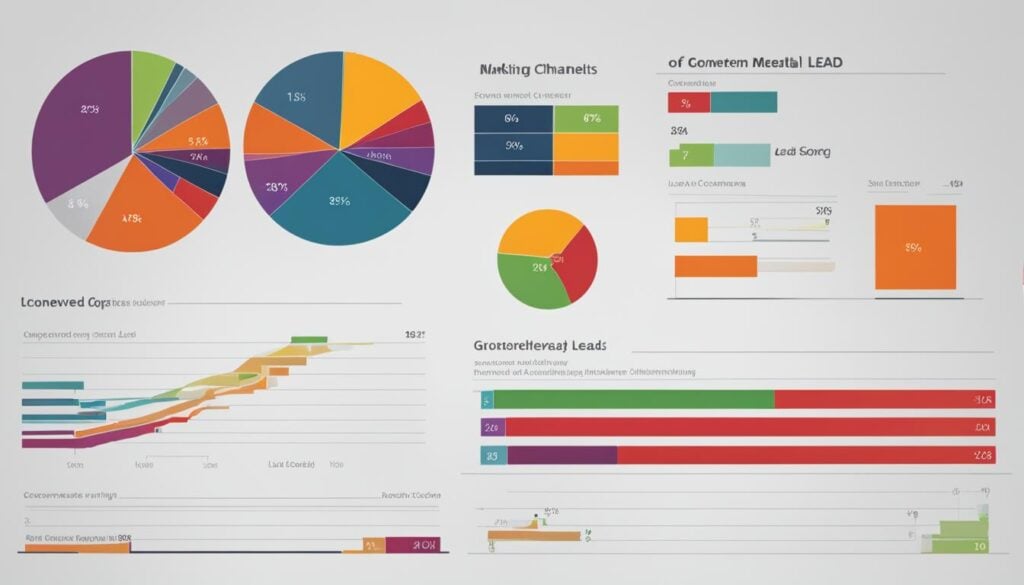
By keeping a close eye on these KPIs, you are equipped to make data-driven decisions that can lead to significant sales performance improvement. Track, analyze, and iterate on your lead scoring practice with these metrics in mind to truly master your marketing automation efforts and drive your lead management towards excellence.
Lead Scoring Software: Choosing the Right Platform for Your Business
When the stakes are high in the realm of digital marketing, investing in the right lead scoring software becomes pivotal for your marketing technology investment. This daunting task requires you to engage in a comprehensive lead scoring platform comparison to find a solution that aligns with your specific business needs. With the vast array of options available, focusing on software feature evaluation is crucial to ensure the platform you choose can adeptly manage customer journey analytics and contribute to the acceleration of your business growth.
As you weigh your options, it’s important to consider how each lead scoring solution caters to the following aspects:
- Customer Journey Analysis: The capacity to dissect and comprehend each phase of the customer journey is invaluable. Your ideal platform should offer detailed analytics that allow you to monitor lead behavior throughout the engagement lifecycle.
- Feature Richness: Evaluate the suite of features offered, including real-time scoring updates, integration capabilities, and the breadth of data points analyzed. The right feature set can drastically enhance lead qualification and prioritization.
- CRM Integration: Seamless integration with your existing Customer Relationship Management (CRM) system is imperative. This ensures a synchronized flow of data and a unified view of your leads.
- Scalability: As your company grows, so too will your lead scoring needs. Opt for a platform that promises scalability and the ability to handle increased volume without compromising on performance.
- ROI Potential: Above all else, the platform should have a demonstrable track record of offering a substantial return on marketing technology investment, underscoring its efficiency and impact on sales.
In your quest for the ideal lead scoring platform, consider generating a shortlist of candidates and then undertaking a meticulous evaluation of each. Here are some actionable steps:
- Identify Your Needs: List down the specific capabilities you’re seeking, such as machine learning algorithms, predictive scoring, or industry-specific features.
- Request Demonstrations: Once your shortlist is prepared, reach out to the providers for in-depth demonstrations that highlight how their software tackles customer journey analytics and lead scoring intricacies.
- Gather User Feedback: Seek testimonials and user reviews from current clients to get insights into their experiences with the software’s features and support services.
- Compare and Contrast: Stack up your frontrunners against each other, comparing key features, integration ease, scalability, and cost-effectiveness to discern the best fit for your business.
- Make an Informed Decision: Armed with extensive research and thorough comparisons, make an informed choice that promises to bolster your lead scoring efforts and, ultimately, your sales results.
To aid your decision-making, here is a snapshot that encapsulates the essence of a robust lead scoring platform:
With your eyes set on unlocking the potential of sophisticated lead scoring practices, the importance of choosing a platform that can echo the nuances of your marketing strategy is clear. Allow the expertise and innovation of the chosen software to lend you the competitive edge necessary in today’s fast-paced marketing arena. In the end, the best lead scoring platform is one that not only understands the intricacies of your customer’s journey but also magnifies your opportunities for conversion and growth through actionable data insights and superior technological prowess.
Conclusion
In an era where lead management optimization is critical for achieving strategic sales growth, the role of advanced lead scoring techniques cannot be overstated. As you have learned, integrating these sophisticated models into your marketing automation can significantly bolster the success of your campaigns. By methodically analyzing and prioritizing leads based on data-driven insights, your company stands on the edge of a transformative leap—one that promises richer conversions and an upward trajectory in your marketing achievements.
Lead scoring innovation serves as the linchpin in streamlining your sales funnel and fine-tuning your engagement strategies. With these advanced measures in place, your marketing automation success is not merely incremental—it flourishes, enabling you to identify hot leads with unerring precision. This selective focus is what ultimately propels a business towards strategic sales growth, setting the standard for industry peers and competitors alike.
Now, armed with this compendium of lead scoring wisdom, you’re ready to elevate your marketing automation processes and target high-interest leads with confidence. Remember, in the dynamic dance of digital marketing, it’s the choreography of lead management optimization that often decides the performance’s success. As you step forward, let the insights and best practices detailed here guide your rhythms, ensuring every campaign you launch resonates with the promise of growth and success.
FAQ
What is predictive lead scoring and how does it improve marketing automation?
Predictive lead scoring is an advanced technique that uses artificial intelligence (AI) and machine learning to analyze historical lead data and predict future behaviors. It improves marketing automation by allowing marketers to identify and prioritize leads with the highest likelihood of conversion, optimizing the customer acquisition process and enhancing conversion rate optimization.
How does marketing automation refine the lead scoring process?
Marketing automation refines lead scoring by automating tasks such as lead capture, messaging, and nurturing. It scores leads based on their engagement and behaviors, ensuring that the sales team receives well-prioritized leads at the optimal time in the buyer’s journey, ultimately supporting lead conversion optimization.
Why are behavior and demographics important in lead scoring?
Combining behavioral data, such as website activity and email interactions, with demographic information, like industry and job title, offers a more comprehensive view of a lead’s readiness to purchase. This intersection supports targeted marketing campaigns, sales funnel optimization, and more personalized customer profiling.
How are AI and predictive analytics integrated into lead scoring models?
AI and predictive analytics are integrated into lead scoring models by using algorithms to analyze patterns in historical lead data and make informed predictions about which leads are more likely to convert. This enhances the lead scoring efficiency by adding a level of precision to the prioritization of leads.
Can you provide examples of success with predictive lead scoring?
Companies like HubSpot have successfully integrated predictive lead scoring into their operations, resulting in personalized content, higher user engagement, and increased conversion rates. These case studies demonstrate the effectiveness of using data-driven insights to tailor marketing and sales efforts for better customer acquisition.
How does lead scoring go beyond basic demographic information?
Lead scoring goes beyond basic demographics by incorporating behavioral lead scoring insights, such as digital engagement patterns and interactions with marketing content. Advanced scoring models may also use machine learning to continuously refine criteria and adapt to changing lead behaviors, enhancing sales process automation and nurturing tactics.
Why is aligning sales and marketing important in lead scoring?
Aligning sales and marketing is crucial because it ensures that both teams work towards common goals and share qualifications for leads. This collaboration facilitates a unified approach to nurturing and converting leads, fostering strategic lead management and improving the lead-to-customer conversion process.
How do lead scoring tools automate the marketing funnel?
Lead scoring tools, integrated with CRM and marketing automation platforms like Marketo, HubSpot, and Eloqua, allow for the automatic scoring of leads based on predefined criteria. They automate the lead management process, from capture to conversion, reducing errors and increasing efficiency.
What are personalization strategies for lead scoring in different market segments?
Personalization strategies involve categorizing your audience based on specific characteristics and tailoring your lead scoring systems and marketing messages to resonate with each category. This allows you to address unique consumer profiles and increase the relevance of your marketing efforts.
How do you establish effective lead qualification parameters?
To establish effective lead qualification parameters, it is essential to collaborate closely between sales and marketing teams, define clear criteria that reflect both demographic and behavioral factors, and continuously refine these parameters based on conversion data to ensure optimal qualification and prioritization of prospects.
What are some best practices for culturally informed lead scoring systems?
Best practices for creating a culturally informed lead scoring system include understanding the nuances of your target audience, avoiding stereotypes, and incorporating input and cultural insights to ensure that your marketing efforts are inclusive, relevant, and ethical, thereby fostering a deeper connection with your audience.
What key performance indicators should be used to measure lead scoring efficiency?
Key performance indicators such as the MQL to SQL conversion rates and lead velocity through the sales funnel are crucial in measuring the efficiency of lead scoring systems. They help identify how effectively leads are being qualified, nurtured, and converted throughout the sales cycle.
How do you choose the right lead scoring software for your business?
Choosing the right lead scoring software involves comparing features, assessing how well a platform aligns with your business needs, and determining its potential return on investment. You should also consider its capability to analyze and segment the customer journey, integration with existing systems, and scalability for future growth.
