
Welcome to the world of sales funnels, where each stage holds the key to unlocking higher conversion rates and improving your overall sales funnel performance. In this article, we will guide you through the essential strategies and techniques for optimizing your sales funnels, from the initial analysis to implementing effective funnel optimization techniques. Whether you’re a seasoned marketer or just starting out, these tips and tricks will help you increase your conversion rates and ultimately, your sales funnel ROI.
Key Takeaways:
- Optimizing your sales funnels can lead to increased conversion rates and higher revenue.
- An effective sales funnel strategy involves analyzing and optimizing each stage of the funnel.
- Implementing personalized communication and lead magnets can improve engagement and guide prospects through the funnel.
- Social media platforms and online communities can be leveraged to connect with your target audience and foster brand advocacy.
- Follow-ups, persuasive copywriting, and compelling calls to action are essential for driving conversions throughout the sales funnel.
The Importance of Sales Funnels for Business Success
Sales funnels play a critical role in achieving business success. They provide a structured visual representation of a customer’s journey from their initial interaction with a brand to making a purchase. By understanding the stages of a sales funnel and optimizing each one, businesses can increase conversions, revenue, and customer loyalty.
Attracting prospective customers is the first stage of the sales funnel. This involves implementing various marketing activities, such as advertising campaigns, social media engagement, and content creation, to create awareness and capture the attention of potential buyers.
Once prospective customers are aware of your brand, the next stage is to generate interest. This can be done through compelling content, personalized messaging, and targeted offers that resonate with their needs and desires.
The third stage of the sales funnel is the decision-making phase. This is where prospective customers evaluate their options and decide whether or not to make a purchase. By providing clear and informative product information, addressing any concerns or objections, and offering incentives, businesses can increase the likelihood of conversion.
Finally, the action stage is when customers make a purchase. This is the ultimate goal of the sales funnel. By creating a seamless and positive customer experience, businesses can foster customer loyalty and encourage repeat purchases.
Optimizing each stage of the sales funnel is crucial for maximizing conversions and revenue. Through strategic sales funnel optimizations, businesses can identify areas for improvement, test different approaches, and refine their marketing strategies to achieve better results.
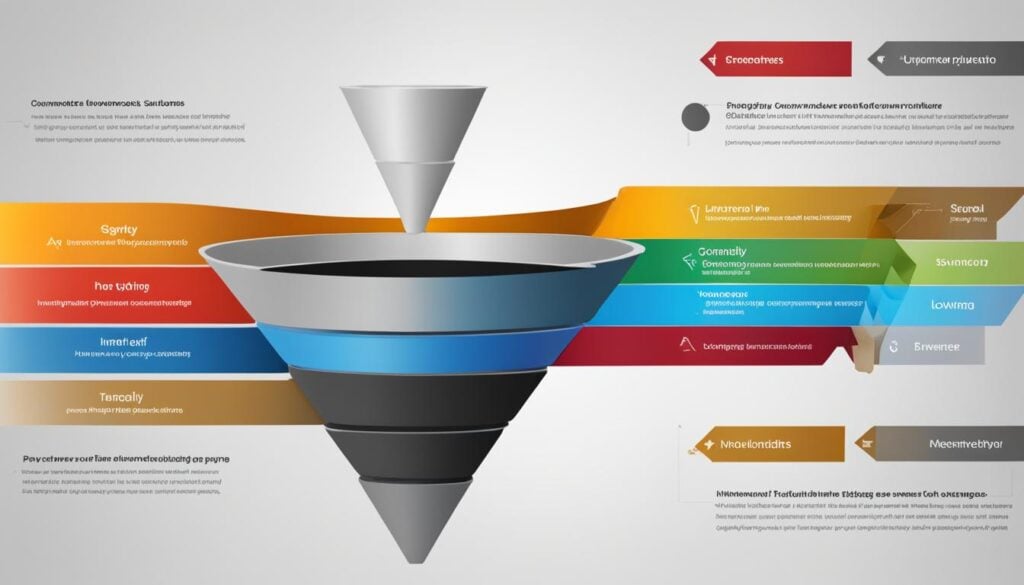
The Four Stages of a Sales Funnel
The sales funnel is a fundamental concept that comprises four important stages: Awareness, Interest, Decision, and Action. Understanding these stages and implementing specific strategies at each point of the customer’s journey can greatly optimize your conversion rates and drive more sales.
Stage 1: Awareness
The Awareness stage is where prospective customers first become aware of your product or service. At this point, they may have a problem or a need that they want to address. Your goal during this stage is to capture their attention and make them aware that your solution exists. This can be achieved through various marketing channels, such as content marketing, social media advertising, and search engine optimization (SEO).
Stage 2: Interest
Once customers are aware of your product or service, they enter the Interest stage. Here, they actively show interest in what you offer and seek more information. To optimize this stage, provide valuable content, such as blog posts, videos, or webinars, that educates and engages your audience. This will help build trust and establish your brand as an industry authority, increasing the likelihood of conversion.
Stage 3: Decision
The Decision stage is when customers evaluate their options and consider making a purchase. They compare different products or services, look at pricing, and weigh the benefits. To optimize this stage, provide clear and compelling information about the unique value proposition of your offer. Use testimonials, case studies, and product demonstrations to showcase the benefits and convince customers that your solution is the best one for them.
Stage 4: Action
The Action stage is where customers make a purchase or take the desired action. This is the final stage of the sales funnel and represents the ultimate goal. To optimize this stage, ensure that the purchasing process is seamless, user-friendly, and secure. Offer incentives, such as free shipping or limited-time discounts, to encourage immediate action.
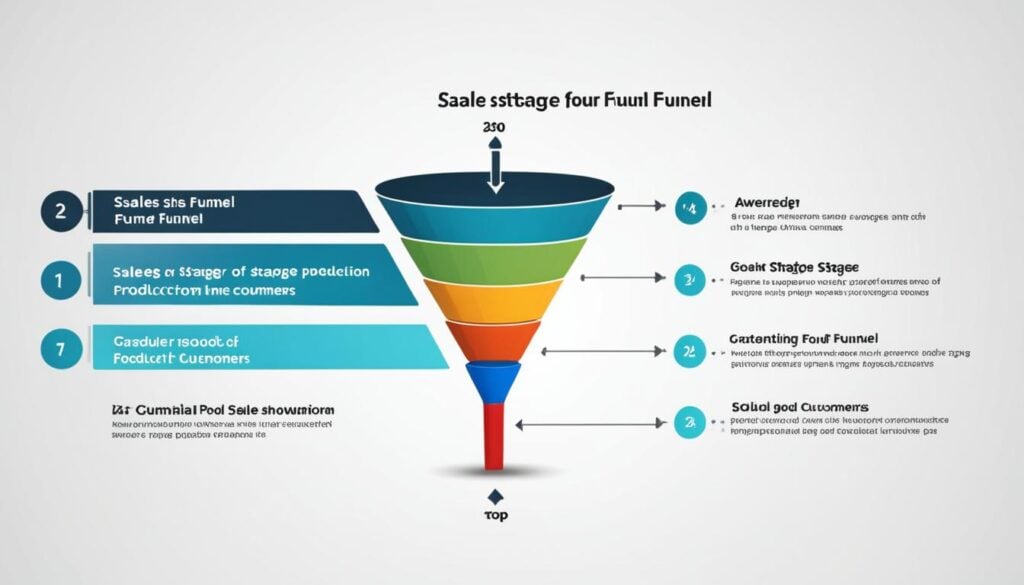
By understanding and optimizing each stage of the sales funnel, you can guide customers smoothly from awareness to action, increasing your conversion rates and driving more sales. In the next sections, we will explore specific strategies and techniques to maximize the efficiency of each stage, allowing you to unlock the full potential of your sales funnel and achieve sustainable growth.
Identifying and Segmenting Your Target Audience
To optimize your sales funnel, it is crucial to identify and segment your target audience. By understanding the unique characteristics, needs, and preferences of your audience, you can tailor your marketing efforts to effectively engage and convert them into loyal customers.
One of the key steps in identifying your target audience is conducting market research. This involves gathering and analyzing data on the demographics, socioeconomic factors, and behavioral data of your potential customers. Tools like Market Explorer can assist you in collecting this information.
Once you have collected the demographic data and behavioral data, you can segment your audience into distinct groups based on similar characteristics. This segmentation allows you to create buyer personas, which are fictional representations of your ideal customers.

Buyer personas help you gain a deeper understanding of your target audience by considering their goals, challenges, values, and motivations. By appealing to these specific wants and needs, you can tailor your marketing messages and offers, increasing the chances of capturing their attention and driving conversions.
Segmenting your target audience and creating buyer personas enables you to deliver highly targeted and personalized marketing campaigns. By speaking directly to the needs and interests of different segments, you can optimize your sales funnel for maximum effectiveness and achieve better results.
Using Lead Magnets to Capture Prospects’ Information
Lead magnets are valuable resources that businesses offer to prospects in exchange for their contact information. These lead magnets can include ebooks, webinars, exclusive articles, and other useful resources. By offering these resources, you can entice prospects to share their email addresses, allowing you to establish a direct line of communication and nurture relationships with potential customers.
With access to prospects’ email addresses, you can deliver targeted messages that address their specific interests and needs. These messages can help guide prospects through the sales funnel, providing them with valuable information and building trust in your brand. Through consistent and tailored communication, you can establish a strong relationship with prospects, increasing the likelihood of converting them into loyal customers.
To effectively use lead magnets, it is important to create high-quality resources that align with your target audience’s interests and provide value. By offering valuable and relevant content, you can capture prospects’ attention and encourage them to provide their contact information in exchange for access to these resources. This mutually beneficial exchange sets a solid foundation for nurturing relationships and moving prospects closer to making a purchase.
To illustrate the power of lead magnets, consider offering an exclusive ebook titled “The Ultimate Guide to Sales Funnel Optimization.” This resource can provide valuable insights and strategies for maximizing the efficiency of sales funnels. By utilizing an eye-catching design and compelling content, the ebook becomes an enticing lead magnet that prospects are eager to obtain.
By strategically placing opt-in forms on your website, landing pages, and social media platforms, you can capture prospects’ email addresses and grow your subscriber list. Once you have their contact information, you can leverage targeted email marketing campaigns to continue engaging with prospects and delivering personalized content that addresses their pain points and interests.
Remember, lead magnets are not only a means to capture prospects’ contact information but also an opportunity to create a positive first impression, showcase your expertise, and demonstrate the value your brand offers. By consistently providing valuable resources and personalized messaging, you can nurture relationships and guide prospects through the sales funnel with greater success.

Personalizing Communication for Increased Engagement
In today’s digital landscape, personalization is key to capturing the attention and engagement of your audience. By utilizing customer data, you can create targeted messages that resonate with their specific interests and needs. One effective way to personalize your communication is by incorporating the customer’s name in your email marketing campaigns. This simple touch can significantly increase engagement and conversion rates.
When crafting email marketing campaigns, it’s important to go beyond the generic “Hello” or “Dear Customer” and instead address your customers by their names. This personal touch creates a sense of familiarity and connection, making your emails feel more authentic and relevant.
But personalization goes beyond just using the customer’s name. It’s essential to understand their interests and needs. By gathering customer data and analyzing their interactions with your brand, you can tailor your messages to their specific preferences. For example, if a customer has shown a particular interest in a specific product category, you can send them targeted recommendations or exclusive offers related to that category.
Personalized communication not only increases engagement but also improves the overall customer experience. When customers receive messages that align with their interests and needs, they are more likely to pay attention, take action, and develop a deeper connection with your brand.
Leveraging Social Media Platforms for Audience Connection
Social media platforms offer a unique opportunity to connect with your target audience on a personal level. By utilizing these platforms effectively, you can engage with your audience and encourage them to progress through the sales funnel.
One way to connect with your audience is by sharing timely and relevant content. By keeping up with current trends and sharing valuable information, you can establish yourself as a trusted source and keep your audience engaged.
Another effective strategy is to offer exclusive previews or sneak peeks of upcoming products or services. This creates a sense of anticipation and makes your audience feel special, further building a connection with your brand.
In addition to sharing content and exclusives, it is essential to respond to comments and engage with your audience. Whether it’s answering questions, addressing concerns, or simply acknowledging their feedback, responding to comments shows that you value their opinions and are attentive to their needs.
Managing social media communication can be overwhelming, especially if you have multiple platforms to monitor. That’s where tools like Social Inbox come in handy. They streamline and organize your social media interactions, making it easier to respond to comments and stay on top of conversations.
To further enhance the audience connection on social media, consider incorporating visual elements like images or videos to capture attention and make your content more engaging. This can help increase the reach and impact of your messages, ultimately driving more conversions.
Remember, building an audience connection on social media takes time and effort. Consistency and authenticity are key. By leveraging these platforms effectively, you can create meaningful connections with your audience and guide them through the sales funnel.
Building an Online Community for Engagement
Connecting with others who share similar interests is a powerful way to foster engagement and build a community online. By creating an online community, businesses can bring together individuals who are passionate about their brand, products, or services. This community serves as a platform for discussions, knowledge sharing, and networking, allowing members to connect with like-minded individuals and form meaningful relationships.
When nurturing relationships within an online community, businesses have the opportunity to convert community members into advocates for their brand. Advocates are passionate supporters who not only purchase products or services but also actively promote and recommend them to others. These advocates play a vital role in brand advocacy, contributing to increased conversions and brand awareness.
To build and foster an online community, it is important to establish a platform where members can engage in discussions, share their experiences, and provide feedback. This can be done through a dedicated forum, social media groups, or even a branded community platform. Encouraging active participation and providing valuable content and resources will help create a thriving community of advocates.
Benefits of Building an Online Community:
1. Shared Interests: An online community allows individuals with shared interests to connect, creating a sense of belonging and fostering engagement.
2. Discussions and Knowledge Sharing: Community members can engage in meaningful discussions, share their expertise, and learn from one another.
3. Advocate Development: Nurturing relationships within the community can turn members into brand advocates, leading to increased conversions and brand advocacy.
4. Customer Feedback: An online community provides a platform for gathering valuable feedback and insights from customers, helping businesses improve their products or services.
5. Networking Opportunities: Through an online community, members can connect with industry professionals, potential collaborators, and mentors, expanding their network.
Building an online community not only strengthens customer relationships but also provides a platform for ongoing engagement and advocacy. By fostering connections, businesses can tap into the power of brand advocacy, driving conversions and sustainable growth.

Implementing Effective Follow-Ups to Persuade Potential Customers
After capturing the interest of potential customers, it’s crucial to follow up with them to nudge them closer to making a purchase. By implementing effective follow-up strategies, you can persuade potential customers who have shown interest but have not yet completed a purchase.
One common scenario where follow-ups are essential is with abandoned shopping carts. When a customer adds items to their cart but leaves the website without completing the purchase, it presents an opportunity to re-engage and convince them to return.
Email remarketing is a powerful tool for follow-ups. By sending personalized emails to individuals who have abandoned their shopping carts, you can remind them of the items they left behind and provide incentives to encourage them to complete the purchase. This form of follow-up utilizes personalization to address customer-specific needs and preferences, increasing the chances of conversion.
When crafting follow-up emails, it’s essential to create persuasive content that resonates with potential customers. Your content should highlight the benefits and unique selling points of the products or services they were interested in. By addressing their pain points and offering solutions, you can create a sense of urgency and persuade them to take the next step.
Remember to utilize personalization in your follow-ups. Address customers by their names and tailor your messages based on their previous interactions with your brand. This personalized approach demonstrates that you value their individual needs, increasing the likelihood of engagement and conversion.
Implementing effective follow-ups can significantly increase your conversion rates and drive revenue. By utilizing email remarketing, personalization, and persuasive content, you can gently guide potential customers through the sales funnel and towards completing a purchase.

Mastering the Art of Persuasive Copywriting
Copywriting is an essential skill in the world of marketing. It involves crafting strategic words and phrases that captivate your target audience and drive them to take action. When done effectively, persuasive copywriting can create compelling content that resonates with your audience and increases their engagement with your brand.
One key aspect of persuasive copywriting is the use of strategic words. These are carefully chosen words that evoke emotions, spark curiosity, and highlight the benefits of your products or services. By selecting the right words, you can create a sense of urgency, build trust, and establish a strong connection with your audience.
When crafting your copy, it’s important to keep your audience in mind. Understand their pain points, desires, and aspirations, and tailor your message to address these needs. By showing your audience how your product or service can solve their problems or fulfill their desires, you can create a compelling case for them to engage with your brand.
Furthermore, persuasive copywriting involves using storytelling techniques to captivate your audience. By weaving narratives and using descriptive language, you can create an emotional connection that resonates with your readers. This not only grabs their attention but also makes your message more memorable and impactful.
To enhance the effectiveness of your copywriting, it’s crucial to have a clear call to action. This is a specific and compelling statement that prompts your audience to take the desired action, whether it’s making a purchase, signing up for a service, or subscribing to a newsletter. By making your call to action clear and concise, you make it easy for your audience to understand what you want them to do next.
Insert relevant H3 if needed
Effective copywriting can significantly drive the success of your marketing campaigns. It has the power to capture attention, build trust, and ultimately convert readers into customers. By mastering the art of persuasive copywriting and creating compelling content, you can engage your audience and drive them to take action, ultimately increasing your conversions and achieving your business goals.

Creating Compelling Calls to Action
A call to action (CTA) is a vital element in your marketing materials that prompts the audience to take a specific action. A well-crafted CTA appeals to their interests and needs, creating a sense of urgency and compelling them to take action. Whether it’s making a purchase, signing up for a newsletter, or filling out a form, an effective CTA supports your conversion goals and drives engagement throughout the sales funnel.
To create engaging CTAs, consider the following:
Be Clear and Specific
Make sure your CTA clearly communicates the specific action you want your audience to take. Use strong, action-oriented language that leaves no room for ambiguity. For example, instead of “Learn More,” try “Get Your Free Ebook Now!”
Create a Sense of Urgency
Use words and phrases that create a sense of urgency, prompting your audience to act immediately. Limited-time offers and countdown timers can help generate a feeling of scarcity. For instance, “Limited Stock! Buy Now and Save 50%!
Appeal to Emotions
Connect with your audience on an emotional level by incorporating persuasive language that evokes their desires and pain points. Use words that convey the benefits they’ll experience by taking the desired action, such as “Transform Your Life Today!”
Design and Placement
Ensure that your CTA stands out visually by using contrasting colors, larger fonts, or buttons. Place it prominently on your web page or email, making it easily noticeable and accessible. Experiment with different CTA designs and placements to find what resonates best with your audience.
Remember, compelling CTAs are a powerful tool to guide your audience towards the actions you want them to take. When crafted strategically, they can significantly improve your conversion rates and drive engagement throughout the sales funnel.

Leveraging Social Proof for Increased Conversions
Social proof plays a significant role in influencing buying decisions. When potential customers see that others have had positive experiences with your product or service, it builds trust and enhances their confidence in making a purchase. By incorporating social proof throughout your sales funnel, you can increase conversions and drive business growth.
One effective way to showcase social proof is through customer reviews. By featuring genuine testimonials from satisfied customers, you provide reassurance to potential buyers. Highlighting the experiences and positive outcomes others have had with your offerings can significantly influence their decision-making process.
Another powerful form of social proof is case studies. These real-life examples demonstrate how your product or service has solved a specific problem for a customer. By sharing the challenges they faced, the solutions you provided, and the results they achieved, case studies demonstrate the value and efficacy of your offerings.
Social media comments and shares are also valuable forms of social proof. When people see that others are engaging with your brand on social media and endorsing your products or services, it creates a sense of validation. By encouraging users to comment, share, and engage, you can amplify the impact of social proof on your target audience.
Real-Life Example: ABC Fitness
ABC Fitness, a leading fitness equipment brand, leverages social proof to drive conversions. On their website, they prominently display customer reviews, highlighting the positive experiences and transformational results their customers have achieved. They also regularly share success stories on social media platforms, showcasing how their equipment has helped individuals reach their fitness goals. By consistently leveraging social proof, ABC Fitness instills confidence in potential customers and drives increased sales.
By incorporating social proof into your sales funnel, you can boost credibility, build trust, and influence buying decisions. Utilize customer reviews, case studies, and social media comments or shares strategically throughout the customer journey to enhance the conversion rate. With the power of social proof, you can persuade potential customers to take action and become loyal brand advocates.
Retargeting and Remarketing Strategies for Customer Retention
Retargeting and remarketing strategies are essential for businesses looking to retain the interest of customers who have engaged in the past. By leveraging these strategies, you can guide potential customers towards an initial sale and continue engaging with past customers for future sales.
Retargeting involves displaying targeted ads to users who have previously interacted with your website or online content. This strategy ensures that your brand stays top-of-mind for potential customers, reminding them of their initial interest and encouraging them to take action. By staying engaged with these customers throughout their buyer’s journey, you can increase the likelihood of conversions and future sales.
Remarketing, on the other hand, focuses on re-engaging with customers who have already made a purchase or showed interest in your products or services. It involves personalized communication and tailored offers to nurture these relationships and encourage repeat purchases. By providing exclusive discounts, personalized recommendations, or loyalty programs, you can create a sense of value and continue to meet the needs of your customers.
Building customer loyalty and fostering ongoing engagement is key to increasing conversions and revenue. By implementing retargeting and remarketing strategies, you can ensure that your business stays top-of-mind, maintain customer interest, and drive future sales.
A/B Testing for Data-Driven Optimization
A/B testing is a valuable data-driven process that empowers businesses to gather real-time feedback on various elements of their sales funnel. By conducting A/B tests on website design, landing pages, and advertising content, you can identify optimization opportunities and make data-supported decisions. This allows you to refine and improve the overall performance of your sales funnel.
Implementing A/B testing provides you with valuable insights into user behavior and preferences. By testing different variations and comparing their performance, you can uncover which design elements, copy, or calls to action resonate best with your audience. The ability to gather real-time feedback enables you to iterate quickly and make informed decisions to enhance the effectiveness of your marketing efforts.
A/B testing also presents optimization opportunities for website design. By testing different layouts, color schemes, or navigation menus, you can identify design elements that improve user experience and streamline the customer journey. By continuously refining and optimizing your website design based on A/B testing results, you can increase engagement, conversions, and ultimately drive more sales.
When it comes to advertising content, A/B testing allows you to experiment with different headlines, copy, visuals, and CTAs to determine what resonates best with your target audience. By analyzing the performance of each variation, you can optimize your advertising strategy and allocate resources to the most effective content. This data-driven approach ensures that your advertising campaigns are customer-centric and have the highest chances of generating conversions.
Furthermore, A/B testing can uncover optimization opportunities specific to landing pages. By testing variations in layout, content placement, form design, and length, you can fine-tune your landing pages to maximize conversions. Real-time feedback from A/B tests provides valuable insights into user behavior, allowing you to make data-driven decisions that drive higher conversion rates and improve the performance of your sales funnel.
Implementing A/B testing as part of your optimization strategy provides you with the opportunity to continuously improve and refine your sales funnel. By leveraging real-time feedback and data-driven insights, you can identify optimization opportunities in website design, advertising content, and landing pages. A/B testing empowers you to make informed decisions that enhance the overall performance of your sales funnel and drive sustainable growth.
Conclusion
Sales funnel optimization is the key to achieving sustainable growth and building strong customer relationships. Throughout this article, we have discussed various strategies and techniques to help businesses unlock the full potential of their sales funnel.
By implementing these optimization strategies at every stage of the funnel, from attracting prospects to closing the deal, businesses can increase conversions, drive revenue, and ultimately achieve greater success.
Remember, sales funnel optimization is a continuous process. Regularly analyze and measure the performance of your funnel, and make data-driven adjustments to improve its effectiveness.
By leveraging the power of sales funnel optimization, you can create a seamless customer journey, nurture relationships, and ultimately drive sustainable growth for your business.
FAQ
Q: What is a sales funnel?
A: A sales funnel is a structured visual representation of a customer’s journey from their first interaction with a brand to making a purchase.
Q: What are the four stages of a sales funnel?
A: The four stages of a sales funnel are Awareness, Interest, Decision, and Action.
Q: How can I optimize my sales funnel for maximum efficiency?
A: To optimize your sales funnel, you can identify and segment your target audience, use lead magnets to capture prospects’ information, personalize communication, leverage social media platforms, build an online community, implement effective follow-ups, master persuasive copywriting, create compelling calls to action, leverage social proof, utilize retargeting and remarketing strategies, conduct A/B testing.
Source Links
- https://mountain.com/blog/10-sales-funnel-optimization-strategies-to-increase-conversions/
- https://www.semrush.com/blog/make-sales-funnel-convert-better/
- https://codeconspirators.com/the-ultimate-guide-to-sales-funnel-optimization/
