

If you’re looking to elevate your business, Customer Feedback Analysis in CRM is the gateway to unlocking the potential of customer insights. In an era where over 91% of companies with more than a handful of employees deploy CRM systems to marshal customer information, the pivot to data-driven decisions has never been more critical. But here lies the crux; the chasm between gathering vast swathes of data and chiseling out actionable intelligence is wide. The question is no longer about collecting customer feedback—it’s about how to analyze customer feedback effectively.
With an alarming 95% of businesses grappling with data quality challenges, the road to CRM optimization is paved with the need for meticulous and sophisticated analysis. This piece is your compass—pointing towards how to dissect, interpret, and refine customer feedback through advanced tools and practices, ensuring every ounce of data transforms into meaningful insights that propel you towards an optimized CRM and, ultimately, a superior customer experience.
Key Takeaways
- Embrace the transformative power of analytics to glean actionable insights from customer feedback within CRM.
- Recognize the importance of quality over quantity in data for CRM efficacy.
- Understand that CRM optimization is an ongoing process informed by continuous customer feedback analysis.
- Learn the significance of AI-powered tools in deciphering diverse and complex customer data.
- Prepare to leverage feedback to fine-tune your services, products, and customer journey— ensuring your CRM is not just a repository, but a dynamic tool for growth.
Introduction to CRM and its Significance in Business
Imagine you’re at the helm of a thriving business. Your priority? Harnessing the flood of daily customer interactions and transforming them into structured, insightful data. Enter Customer Relationship Management (CRM), a powerhouse tool that’s become indispensable in our data-driven market. It enables businesses like yours to meticulously oversee customer interactions and manage vast amounts of data—all with the goal of driving strategic decisions.
Consider the statistics: a vast majority of companies with more than ten employees now lean on CRM systems. It is not just about record-keeping; it’s about leveraging business data to scale new heights in customer satisfaction and service. After all, over 85% of businesses are prioritizing data-driven strategies for decision-making.
But here’s where it gets even more compelling—much of the treasure trove of data is concealed within customer feedback. Yes, the feedback you gather has the potential to reveal what’s resonating with your customers and what’s amiss. That’s where CRM customer feedback analytics come into play, acting as the key to unlocking this potential.
Through meticulous evaluation and analysis of customer feedback, your CRM system transforms from a passive data repository to an active engine that propels business growth. It’s about finding the pulse of your customer base and, in turn, enriching their experience with your products and service offerings. It’s this craft of turning feedback into a roadmap for enhancement that epitomizes the core of CRM’s value in today’s businesses.
Customer Feedback Analysis in CRM
As you navigate the nuances of customer relationship management, the use of feedback analysis in CRM can significantly enhance your ability to foster a customer-centric business. By methodically dissecting the responses from your clientele, you tap into a wellspring of qualitative data, ripe for conversion into strategies that can substantially optimize customer experience.
Defining Customer Feedback Analysis
Customer feedback analysis represents a cornerstone in the realm of modern CRM. It involves sifting through each review, comment, and piece of feedback with the purpose of extracting valuable insights. The analysis provides a direct channel to your customer’s needs, preferences, and experiences, which is essential for personalized service and product improvement. Feedback arises across a spectrum of channels, from social media to direct customer service interactions, encapsulating a rich diversity of customer voices to aid in crafting a responsive business approach.
The Role of Feedback Analysis in CRM Data Enrichment
A pivotal facet of CRM data enrichment is its reliance on impeccable feedback analysis. This process ensures your CRM isn’t just collecting data, but is enhanced by it, transforming raw, often convoluted customer input into intelligible, actionable knowledge. Through sophisticated techniques like sentiment analysis, you can decode the complex emotions and sentiments hidden beneath the surface text, adding layers of depth to your customer understanding. This shift from data quantity to data quality through CRM data enrichment is crucial to preemptively navigate customer issues and streamline the customer journey to loyalty and satisfaction.
The Impact of Customer Feedback on CRM Strategies

When you delve into the realm of feedback analytics for customer relationship management, you’re engaging in a practice that has transformative potential for your CRM strategy enhancement. The insights gleaned from customer feedback are much more than mere comments—they are the pulse to which your CRM system must sync. These are not just messages from clients; they are direct insights into their experiences, sentiments, and demands.
Imagine every piece of feedback as a building block. Blocks that, when put together correctly, heighten the foundation of your customer service and CRM strategy. You are in an advantageous position to strengthen your business relationship with every customer, iron out creases in your service fabric, and map out a path leading to enhanced satisfaction and unwavering loyalty.
- Uncover areas in your product or service that need improvement, channeled through feedback analytics.
- Evaluate genuine sentiments that point to your customers’ satisfaction levels, ensuring you know what works and what doesn’t.
- Bring to light opportunities for growth that can catapult your brand to the forefront in your industry.
Think of feedback analytics as the science of decoding a language spoken by your customers—a language that can either be the lifeline or the Achilles’ heel of your CRM initiatives. By actively incorporating these insights into your CRM strategies, you tailor your approach not just to meet expectations, but to exceed them, hence deepening the customer relationship tapestry.
Your CRM system, powered by methodical and strategic feedback analysis, transitions from a static customer database to a dynamic tool. It’s not just about capturing data; it’s about interpreting it in a way that fosters growth, nurtures customer loyalty, and emboldens your CRM framework. These meticulous efforts lend to a CRM strategy that’s not only robust but also resonates with the voice of your clientele.
Challenges of Interpreting Customer Feedback Data
As businesses endeavor to extract valuable insights from their CRM systems, the task of interpreting customer feedback data looms large. In a digital ecosystem awash with customer interactions, nimbly navigating the labyrinthine world of feedback is paramount. Companies must wrestle with the inherent complexities of multichannel feedback analysis and the muddled nuances often found in unstructured feedback interpretation.
It’s imperative for you to sift through swathes of unstructured data—emails, surveys, social media comments—that are typically inconsistent in format and scattered. This process can seem Herculean, yet it holds the key to paving the way for actionable insights in CRM. The challenges are manifold, but equipping yourself with a suite of feedback analysis tools can turn the tide, turning chaos into clarity. Let’s delve into these challenges more intricately.
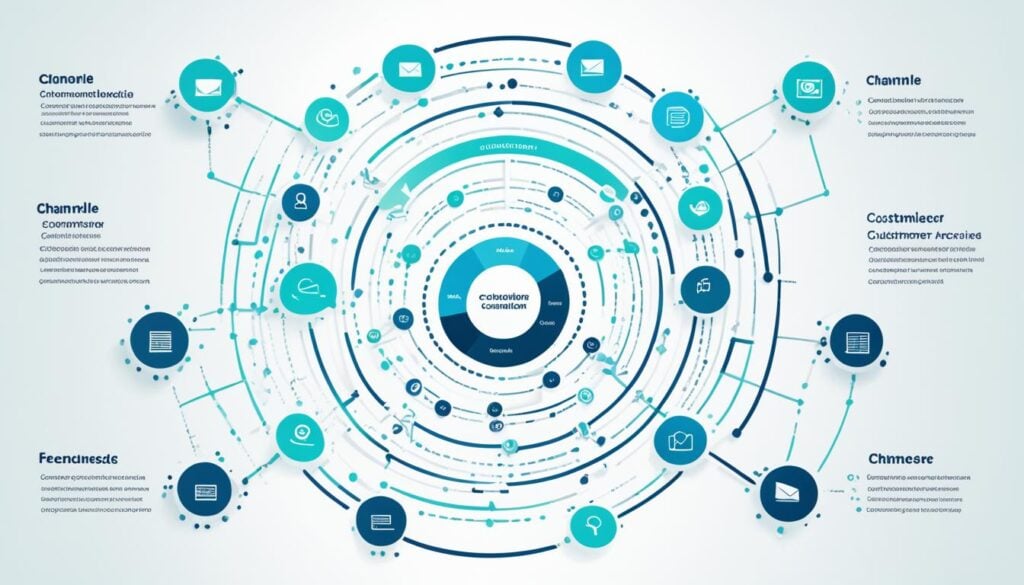
Dealing with Unstructured Feedback Across Multiple Channels
Firstly, consider the kaleidoscope of customer sentiment spread over diverse forums, each presenting its analog of customer sentiment. The use of feedback analysis tools designed for multichannel parsing is more than a luxury; it’s a necessity. Without these tools, businesses would find themselves lost in a sea of disjointed customer expressions—jargon, mixed metaphors, a domain-specific lexicon—requiring astute unstructured feedback interpretation to decode.
Language and Sentiment Nuances in Feedback Analysis
Adding to the intricacy is the task of grasping the customer sentiment analysis in CRM. Each customer’s voice carries unique emotional undertones and cultural connotations, making the process as much art as it is a science. You must be attuned to these nuances when parsing feedback to transform it into CRM reflections. Multilingual feedback analysis becomes all the more crucial as you look to resonate with a global customer base, ensuring no vital insight slips through the linguistic cracks.
Ensuring Data Quality for Actionable Insights
Ultimately, the cornerstone of feedback analysis lies in cementing CRM data quality. Without high-caliber data, the bridge to actionable insights remains fragile. Cluttered texts, varied data protocols, multiple language needs—each of these elements must be addressed to hone the precision of your feedback analysis. The goal is unfettered—a CRM repository that brims with high-grade, actionable data, ready to inform decisions and strategies.
Confronting these challenges head-on may test the mettle of your analytical tools and strategy, but in doing so, you set the stage for a CRM that isn’t merely reactive, but predictively dynamic, adaptive to the shifting landscape of customer relations.
Key Advantages of Applying CRM Feedback Reporting
When you realize the pivotal role CRM feedback reporting plays in honing business strategies, you’ll wish you had incorporated it sooner. Buried within your customers’ insights are the key advantages that can dramatically refine your approach to customer relationships and bolster your CRM’s effectiveness.
CRM feedback reporting is not just about gathering data—it’s about thoughtfully analyzing and responding to it, allowing you to unearth and address operational flaws that may have gone unnoticed. This meticulous process is indispensable in uncovering the often subtle patterns that reveal your customers’ true expectations and satisfaction levels.
- Precision Targeting of Operational Improvements: Through CRM feedback reporting, you can quickly pinpoint areas where your operations may falter. This enables you to act swiftly, preventing minor issues from escalating into major customer concerns.
- Enhanced Understanding of Customer Needs: Feedback reporting delves deep into customer psyche, providing you with granular insights that can lead to highly tailored experiences. The clearer the customer portrait, the more precise you can be in meeting—and exceeding—their expectations.
- Personalization of Customer Interactions: With these reports in hand, personalizing each interaction becomes an achievable reality. The feedback directs you to the customized tweaks that can turn a satisfactory experience into an exceptional one.
- Empowered Sales Teams: Your sales force can take CRM feedback reporting and march confidently into their strategies. The hard data behind customer preferences enables them to craft offers that resonate on a more personal level—facilitating not just conversion but also retention.
- Customer Service Excellence: Reporting sharpens your customer service edge, encouraging proactive solutions that meet the needs and solve problems even before frustrating your clients. This is an excellent tactic in minimizing complaints and fostering positive brand perception.
- Churn Reduction: Perhaps one of the most impactful benefits is the ability to significantly minimize customer churn. CRM feedback reporting reveals the precursors to customer departure, giving you the chance to intercept and maintain those valuable relationships.
The eventual outcomes circle back to improved customer relationships—the epicenter of your CRM initiative. Every piece of feedback holds a clue, and every report offers a roadmap to excellence. When done correctly, CRM feedback reporting doesn’t just signal changes; it ignites a potent transformation in how your business views and values the voices of your customers.
Methods and Tools for Efficient Feedback Analysis
Navigating the intricacies of customer feedback can be daunting, but with the right approaches and technologies, you can transform this raw information into actionable CRM insights. In this landscape, Natural Language Processing (NLP) and AI-driven tools are game-changers, offering nuanced and sophisticated analysis.

Understanding Natural Language Processing (NLP) for CRM
At the forefront of feedback analysis is Natural Language Processing for CRM, a cutting-edge technology designed to interpret the vast and varied human language in customer feedback. For you, this means that NLP can meticulously sift through comments, suggestions, and inquiries, irrespective of their structure or complexity. NLP feedback analysis automates tasks such as sentiment analysis and keyword extraction, providing a robust framework for informed CRM decision-making.
AI-Driven Feedback Analysis Tools and Their Capabilities
Furthermore, AI-driven feedback analysis tools are propelling CRM data analysis methods forward, offering capabilities that far exceed manual processes. These tools excel in collecting and processing large datasets, interpreting sentiments, and detecting patterns within your customer feedback. Imagine having the ability to understand context, analyze emotions, and convert text to speech effortlessly—this is the value that these tools bring to your CRM feedback analysis software capabilities. AI not only helps you listen to what your customers are saying but also understand the deeper meaning behind their words, enabling you to adapt and personalize your responses effectively.
- NLP tools for CRM data analysis which includes complex procedures like machine translation and survey response analysis, streamlining the feedback loop.
- Software that categorizes feedback into actionable items enabling you to swiftly address customer pain points and refine your offerings.
- Capabilities leading to the precise identification of common customer grievances, uncovering opportunities to innovate and enhance user experience.
Leveraging these sophisticated methods and tools, you position your CRM to delve into the nuances of consumer sentiment, enriching your customer relationships and pushing your business towards a data-informed future.
Optimizing the Customer Experience through CRM Data Analysis
At the heart of customer retention and satisfaction lies a deep understanding of CRM data analysis—a technique imperative for customer experience optimization. You can leverage CRM data to dissect and reassemble the entire customer journey, providing a tailor-made experience that not only meets but exceeds customer expectations. By doing so, you not only elevate the customer journey but also secure a position as a leader in customer experience.
Your endeavor starts with drilling into the data sanctum—analyzing customer interactions, purchase history, and feedback—all nestled within your CRM. This meticulous process of CRM data analysis unveils patterns and behaviors that are critical for optimizing the customer experience. You’ll discover the friction points where customers feel challenged and the delight zones where they find value—a dual insight essential for sweeping enhancements.
- Analyze customer touchpoints and transactions to identify preferences and tailor services accordingly.
- Recognize the impact of responsive customer service on loyalty, utilizing CRM feedback as a diagnostic tool.
- Utilize segmentation tools within your CRM to cater to customer diversity and ensure inclusivity in your marketing campaigns.
- Optimize customer lifecycle events, like onboarding and renewals, by examining CRM data to streamline processes and personalize communication.
- Proactively address customer concerns flagged in CRM data, preemptively solving issues before they escalate into customer churn.
Instilling continuous CRM data analysis into your business practices ensures a commitment to customer experience optimization. This ongoing review cycles through and refines data, sharpening your customer insights. With these insights, you’ll transform service delivery by aligning it closely with your customers’ ever-evolving needs.
Armed with CRM insights, you’re positioned to engineer memorable experiences that bond your customers to your brand for the long haul. It’s a virtuous cycle where quality data begets a superior customer experience, which in turn feeds back into the data pool, setting the stage for further enhancements and a perpetually improving CRM ecosystem.
CRM Feedback Analysis Software: Selecting the Right Solution
When it comes to elevating your CRM system’s capabilities, knowing how to select the right CRM feedback analysis software proves invaluable. It’s about finding a tool that not only gleans profound insights from customer feedback but seamlessly blends these insights into your existing CRM ecosystem. Key features, integration capabilities, and the degree of automation all play crucial roles in enhancing the functionality of your CRM.
Features to Look for in CRM Feedback Analysis Tools
As you embark on selecting CRM feedback software, consider these critical features:
- User-friendliness: A tool that has an intuitive interface ensures swift adoption and minimizes the learning curve for your team.
- Comprehensive analytics: The software should be adept at dissecting complex feedback and giving you tangible, easy-to-interpret insights.
- Customization: Look for tools that allow you to tailor the analysis and reports to align with your specific business needs.
- Real-time processing: To make timely decisions, your software must analyze and report feedback in real-time.
- Scalability: Ensure that the solution can grow as your business and customer base expand.
- Automation of tasks: Identify features that automate repetitive tasks, saving time and reducing the chance of human error.
By focusing on these CRM feedback analysis tool features, you ensure that your chosen software provides the necessary capabilities to render customer feedback into actionable business strategies.
Integrating Feedback Analysis Software with Existing CRM Systems
For businesses concerned about feedback analysis software integration, it’s essential that the chosen platform works harmoniously with your existing CRM systems. Seamless CRM system integration is critical for leveraging the full scope of your accumulated data without the hassle of information silos or integration issues. Here’s what to consider:
- Data continuity: Select a tool that can integrate smoothly, maintaining data continuity and integrity.
- Enhanced capability: Your feedback software should not only fit into your existing CRM but also enhance its analytical prowess.
- Centralized analytics: Opt for solutions that can collect feedback from multiple channels and consolidate it in a centralized system for uniform analysis.
- Efficiency: The right integration amplifies your CRM’s efficiency, streamlining all data-related workflows from collection to analysis.
Being meticulous in your approach to CRM feedback software integration plays a pivotal role in the overall success of your CRM strategy, offering a more profound comprehension of customer needs and expectations.
Real-world Success Stories: Feedback Analytics in Action
Transforming a business through effective feedback analytics is a feat many aspire to, but only some achieve. The journey towards CRM strategy success is marked by pivotal moments where customer insights lead to crucial decisions. Your engagement with these real-world success stories reveals the impressive impact of feedback analytics on businesses large and small. Let’s explore how they’ve leveraged complex feedback to refine their CRM approaches and meet the demands of an evolving customer landscape.
Industries across the board have witnessed the tangible benefits of astutely analyzed customer feedback. It could be a tech giant that harnessed multilingual sentiment analysis to enhance global customer satisfaction, or a retail brand that turned around plummeting sales by acting on customer insights derived from their CRM. Each story underscores the success of a CRM strategy deeply informed by feedback analytics.
- Discover how a renowned e-commerce platform identified a critical bottleneck in their checkout process thanks to detailed feedback analysis, thereby significantly reducing cart abandonment rates.
- Learn about a hospitality chain that elevated customer satisfaction by using sentiment analysis to personalize guest interactions, ultimately seeing a remarkable uptick in repeat bookings.
- See how a financial services company transformed its customer service by mapping feedback directly to training modules, leading to increased customer retention and a boost in net promoter scores.
Each narrative offers invaluable insights into the strategic deployment of feedback analysis, from overcoming language barriers to interpreting various feedback formats. These organizational wins are not just case studies—they are roadmaps for you to conceptualize and realize the untapped potential within your data.
The victories of these enterprises emphasize a critical point: feedback analytics aren’t just about harnessing data—they’re about learning the language of your customers and turning that dialogue into CRM strategy success stories. By viewing these historical wins through the lens of feedback analytics, you’re empowered to consider how your CRM strategies might evolve with similarly strategic data utilization.
Remember, the fusion of technology and human insight makes feedback analytics a potent tool for any CRM system. As these businesses have shown, taking the time to listen, analyze, and act on customer feedback can be transformative, propelling your operations to new heights of customer understanding and engagement.
Now, envisage your enterprise amongst these success stories. With commitment to strategic feedback analysis, you can achieve a symbiosis of customer satisfaction and CRM optimization, ensuring your business not only meets but exceeds the expectations of your valued customer base.
Conclusion
As we wrap up this exploration into customer feedback analysis within CRM, the critical role it plays in enhancing your business is clear. The meticulous appraisal of feedback has surfaced as an essential piece in the puzzle of CRM optimization through feedback analysis, motioning companies towards more refined, customer-centric operations. With the benefits of CRM feedback analysis firmly established, let’s reflect on what this means for your business now and what it suggests for the evolution of CRM strategies.
Summarizing the Benefits of Customer Feedback Analysis in CRM
Through the lens of this analysis, your business captures the essence of customer sentiments—a feat that imbues your CRM system with unparalleled insights. This enhanced understanding paves the way for decisive and focused improvements in your products and services, ultimately refining the entire customer journey. The benefits of CRM feedback analysis extend beyond troubleshooting; they cast valuable insights on customer affinities, setting a foundation for elevated satisfaction and fostering loyalty. In essence, this analysis does not just illuminate the path to CRM optimization, but it also serves as the lighthouse guiding your business safely through the competitive tides of the market.
Future Directions in CRM Optimization Through Feedback Analysis
Looking forward, feedback analysis trends suggest that the horizon of CRM optimization is set to broaden, stimulated by the advent of more sophisticated AI and analytical tools. As the capabilities of these tools advance, they are slated to offer even sharper interpretations of the complex, nuanced data your customers generate. This progression bodes well for businesses like yours that are keen on not just keeping pace but setting the pace in an ever-adaptive marketplace. Your unwavering commitment to embracing these innovations will position your CRM strategy on the cutting edge, ensuring that your business not only remains competitive but is also recognized as a visionary in customer relationship excellence.
FAQ
What is Customer Feedback Analysis in CRM?
Customer Feedback Analysis in CRM involves the systematic interpretation of customer feedback data to extract meaningful insights that can enhance CRM optimization. The goal is to turn qualitative and often unstructured feedback into actionable information that can improve customer relationships and business strategies.
Why is CRM essential for businesses?
Customer Relationship Management (CRM) is crucial as it enables businesses to manage and analyze customer interactions and data throughout the customer lifecycle. This leads to enhanced business relationships, improved customer retention, and driving sales growth. A well-implemented CRM system helps businesses stay connected to their customers, streamline processes, and improve profitability.
How does feedback analysis enrich CRM data?
Feedback analysis contributes to CRM data enrichment by processing and categorizing the qualitative information provided by customers. It identifies sentiment, intents, and trends within feedback and translates these into quantitative data that can inform business decisions and strategies, thereby enhancing the customer experience.
What are the main challenges in analyzing customer feedback data?
Key challenges include dealing with unstructured feedback that comes in various formats and from multiple channels, understanding language and sentiment nuances within the feedback, and ensuring high data quality for garnering actionable insights. These challenges require sophisticated tools and methodologies to effectively interpret and utilize the feedback.
What advantages does CRM feedback reporting offer to businesses?
CRM feedback reporting provides insights into operational weaknesses, customer needs, and preferences. It enables businesses to personalize customer experiences based on specific feedback, which results in improved service, increased customer satisfaction, and reduced churn, ultimately leading to strengthened customer relationships.
What is the role of NLP in CRM feedback analysis?
Natural Language Processing (NLP) is used to automate the interpretation and categorization of customer feedback within CRM systems. It performs complex tasks such as sentiment analysis, keyword extraction, and intent recognition, which are essential for transforming unstructured feedback into structured, actionable data.
How do AI-driven feedback analysis tools enhance CRM systems?
AI-driven feedback analysis tools enhance CRM systems by providing advanced capabilities to collect, analyze, and interpret large volumes of customer feedback data efficiently. They can automate complex data analysis tasks, reveal hidden patterns and trends, and provide comprehensive reports that inform CRM strategies.
How does analyzing CRM data optimize customer experience?
By analyzing CRM data, businesses can create detailed customer profiles, personalize interactions, and address customer pain points more effectively. This analysis helps in tailoring the customer journey to individual preferences, thereby optimizing customer experiences and fostering loyalty.
What features should businesses look for in CRM feedback analysis software?
Businesses should focus on user-friendly interfaces, comprehensive analytics, automation of feedback processing, and seamless integration with existing CRM systems. These features help in efficiently interpreting complex feedback and leveraging the resulting insights for business growth.
Why is it important to integrate feedback analysis software with current CRM systems?
Integration is crucial for consistency and adds value to existing data structures by providing advanced analytics and processing capabilities. The right feedback analysis software should support automated data collection, identify trends, and categorize feedback to enhance the efficiency and effectiveness of CRM systems.
Can you provide an example of a success story in feedback analytics?
While specific brand names are not provided, many companies have successfully harnessed feedback analytics to overcome challenges. These businesses have leveraged insights from feedback to improve their products, enhance customer support, and even enter new market segments, attributing their success to strategic use of CRM feedback analysis.
What are the benefits of analyzing customer feedback in CRM?
Analyzing customer feedback in CRM allows businesses to gain a deep understanding of their customers’ needs, enhance their services and products, proactively address issues, and adapt their CRM strategies to align with customer preferences. This leads to an optimized customer journey and boosts customer loyalty and satisfaction.
How is CRM optimization through feedback analysis expected to evolve?
CRM optimization through feedback analysis is expected to grow more sophisticated with the integration of advanced AI and analytics that will provide deeper insights into customer behavior and preferences. These advancements are anticipated to help businesses to foresee customer needs, tailor their engagement strategies accordingly, and maintain a competitive edge.
