

As you navigate the digital marketing landscape, you’ll recognize that the effectiveness of your marketing automation is not solely about the tools employed; it hinges upon understanding and acting upon behavioral insights. Behavioral Targeting in Marketing Automation is transforming how businesses engage with customers, offering a strategic edge that personalizes the user experience to unprecedented levels. By capturing and analyzing historical and real-time data, marketers craft campaigns that significantly improve customer engagement, loyalty, and retention.
In the realm of marketing automation effectiveness, embracing behavioral targeting means setting in motion a series of automated actions triggered by your customers’ interactions with your brand. This tactical approach leverages a wealth of behavioral data, allowing you to send the right message, to the right person, at precisely the right moment in their journey. Prepare to dive into the mechanics of how behavioral insights can elevate your brand’s resonance with its audience and drive conversion rates like never before.
Key Takeaways
- Behavioral targeting refines your marketing automation to deliver content that’s both relevant and compelling to each individual user.
- Utilizing behavioral insights can significantly enhance how you engage and retain your customer base.
- The strategic application of behavioral data allows for precise timing and context in messaging, increasing the efficacy of your campaigns.
- Automated tasks within your marketing strategy can become more actionable and impactful when informed by user behaviors.
- Personalization through behavioral targeting not only drives loyalty but also optimizes the customer’s journey by offering tailored experiences.
The Fundamentals of Behavioral Targeting in Marketing Automation
Delving into the world of marketing automation, you encounter a pivotal trend: behavioral targeting. It’s a technique that not only refines your approach but transforms your relationship with the customer. By adopting strategies underpinned by user behaviors, personalized marketing emerges not just as a goal, but a reality, shaping each customer experience to mirror individual preferences and actions.
Understanding Behavioral Marketing
At its core, behavioral marketing stands as a reflection of consumer actions. It is the lens through which savvy marketers view a user’s journey—taking note of their website analytics, scrolling patterns, and engagement across social platforms. As you refine your personalized content, a pattern of preferences begins to emerge, allowing the crafting of marketing experiences that resonate deeply with your audience. The result? A unique and compelling narrative woven into every marketing message.
The Role of User Data Analysis in Personalized Marketing
User data analysis serves as the cornerstone in the edifice of personalized marketing. Every click, search query, and social interaction becomes a piece of the puzzle. In your hands, these data points are transformed into actionable insights, laser-focused on delivering tailored experiences. As your business harnesses this rich stream of user data, you’ll witness firsthand the crisp precision of targeted messaging capably responding to the individual demands and expectations of users.
Core Principles of Marketing Automation and Behavioral Insights
Marketing automation thrives on the tenets of efficiency and repetition, yet these principles are reinvigorated when powered by behavioral insights. It is the symbiosis between automation and behavior that elevates the function from mere repetition to strategic engagement, optimizing not only the time and resources at your disposal but also enhancing the holistic impact of your campaigns. As you synthesize these insights into your automated systems, prepare to witness the fulfillment of marketing’s greatest promise: the right message for the right user, at just the right time.
Advancements in Targeting Strategies with Behavioral Data
As you delve into the forward march of marketing techniques, one crucial element stands out: the integration of behavioral data in marketing automation. This emergent trend has significantly refined targeting strategies, allowing for a much more nuanced approach to audience interaction than ever before. The precision now possible in automating contextually intelligent promotions captures the attention of businesses and marketers across the globe.
Gone are the days of generic, scattergun advertising. Through the ingenious use of behavioral data—a byproduct of user interactions with brands online—a more granular view of audience segments has emerged. This granular approach is key to current marketing advancements, making way for messages that don’t just reach the right eyes and ears but speak directly to the individual’s preferences and needs.
Your understanding and application of this rich behavioral data empowers automated targeting, which ensures that when a user browses a website or interacts with an app, the marketing system is aware and responds in a personalized manner. This capability isn’t just convenient; it’s game-changing. A surge in conversion rates and an uplift in user experience affirm the value of these technologically driven strategies.

Here’s a snapshot of how these advancements are remaking the marketing landscape:
- Contextual Relevance: Insights from behavioral data allow for the creation of marketing messages that align perfectly with the specific stage of the user’s journey, resulting in increased engagement and higher conversion potential.
- Dynamic Segmentation: Rather than broad categories, segments are now dynamic and adaptable, continually refined by incoming data streams to ensure relevance and resonance with ever-changing consumer behaviors.
- Automated Interactions: Triggered emails, personalized offers, and real-time alerts are delivered at the optimum time in a user’s journey by employing behavioral data—transforming every interaction into an opportunity for engagement and conversion.
- Technological Integration: Systems are increasingly integrated, allowing for seamless exchanges of data and automated actions that underpin sophisticated marketing strategies.
Indeed, the benefits of utilizing behavioral data in advertising strategies are clear and substantial. As a dynamic force driving marketing advancements, this powerfully targeted approach to engagement will continue to play a pivotal role in how brands connect with their customers.
Optimizing Customer Engagement Through Behavioral Targeting
In today’s competitive market, the secret to optimizing customer engagement lies in your understanding and application of behavioral targeting. This approach moves beyond traditional marketing tactics, opening the door to a world of highly personalized interactions that do more than just capture attention—they hold it, nurture it, and let it flourish into lasting customer relationships.
By keeping your finger on the pulse of how customers interact with your brand, you’re positioned to craft marketing messages that resonate on a deeper level. Behavioral data serves as a roadmap, directing you towards the most effective methods of boosting customer retention and ultimately, driving loyalty. After all, when customers feel understood, they stick around.
Boosting Customer Retention with Personalized Interactions
Personalized interactions make your customers feel like they’re more than just another number. By demonstrating that you recognize their unique needs and preferences, you not only make them feel valued but also more likely to continue their relationship with your brand. It’s these subtle, yet powerful, behavioral nuances that can lead to a significant uptick in customer retention rates.
- Analyze browsing habits to suggest products that truly match customer interests.
- Reflect past purchases in your recommendations to create a sense of continuity.
- Deploy targeted offers that acknowledge customer milestones and loyalty.
Driving Loyalty by Catering to Customer Behavior
The end goal of any customer interaction is to foster a sense of loyalty—a connection that withstands the test of time and competition. Driving loyalty comes from a clear understanding of customer behavior, from their first click to their most recent purchase. By catering to this behavior, you not only give customers what they want, but you also anticipate their needs, reinforcing their decision to stay loyal to your brand.
- Use purchasing history to provide exclusive, personalized rewards.
- Create engagement loops that reinforce positive customer actions.
- Develop campaigns that reflect individual user patterns and preferences.
Embracing the full potential of behavioral targeting not only revolutionizes how you engage with your audience, but it also embeds your brand into the fabric of their daily lives, ensuring you remain an ever-present, familiar choice. So embark on the journey—optimize engagement, retain your clientele, and drive unconditional brand loyalty.
Segmentation Techniques and Automation Tools
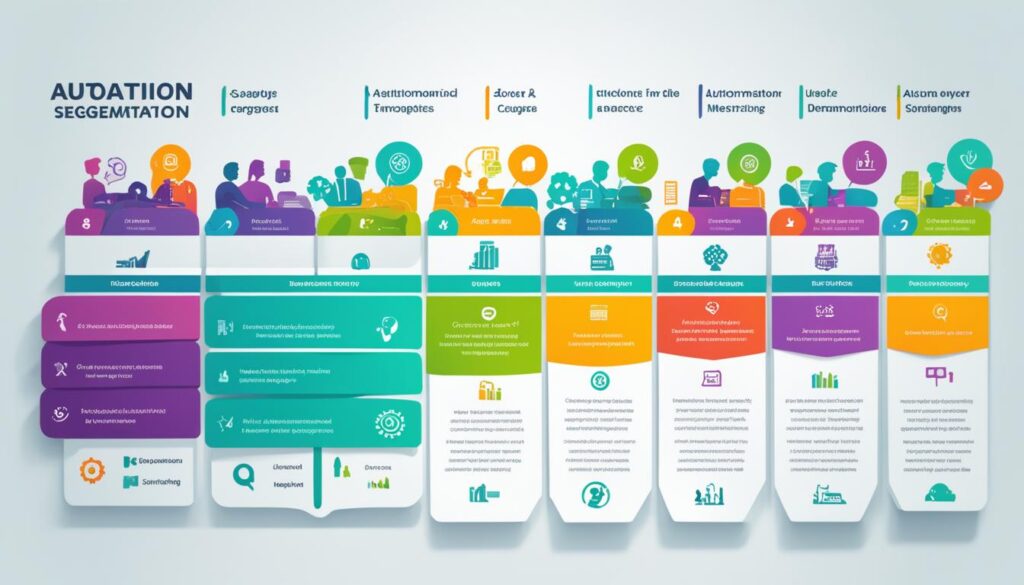
As you dive into the realm of personalized marketing, the importance of robust segmentation techniques becomes undeniable. The ability to dissect a broad audience into meaningful, behaviorally coherent groups is paramount to your campaign’s success. You’ve likely encountered the dynamic duo of audience segmentation and behavioral segmentation, which together form the bedrock of targeted marketing. Through these techniques, you can create messages that resonate deeply with each individual, enhancing engagement and bolstering the impact of your automation efforts.
Segmenting Your Audience for Targeted Campaigns
Mastering the art of audience segmentation demands a keen eye for detail and a deep understanding of your audience’s behavioral patterns. You’re looking to categorize your users not solely by demographic data but more significantly by their interactions with your brand, their purchase history, and their digital engagement. This behavioral lens allows for the curation of highly targeted campaigns, directly appealing to the needs and interests of different user groups. The result? Higher conversion rates and a noticeably personalized touch that speaks volumes to your customers.
- Collect and analyze behavioral data to identify key customer segments.
- Develop content that appeals to the unique motivations and interests of each segment.
- Implement targeted campaigns that directly address users at specific stages of their journey.
Choosing the Right Tools for Behavioral Segmentation
The digital marketing toolbox brimming with automation tools tailored to segmentation can sometimes overwhelm even the most discerning marketers. Opting for the right platform necessitates a careful analysis of the tool’s data collection and processing prowess. Your chosen solutions should offer in-depth behavioral segmentation features, such as custom event tracking and dynamic user tagging. These capabilities will empower you to finely tune your communications with precision, triggering content that not only aligns with your users’ current actions but also anticipates future ones.
- Evaluate tools based on their ability to collect comprehensive behavioral data.
- Explore segmentation features that allow for agile and responsive marketing tactics.
- Invest in automation tools that can execute personalized marketing actions in real-time.
The Impact of Behavioral Targeting on Campaign Optimization
In today’s digital marketing environment, the edge comes not just from the campaigns you run, but how accurately they speak to the individual needs and behaviors of your users. Behavioral targeting has become a potent tool for campaign optimization, leveraging deep insights into user activity to enhance communication strategies across various channels. With an emphasis on email marketing and in-app messaging, let’s explore how these tactics are reshaping campaigns for maximum impact.
Enhancing Email Marketing with Behavioral Triggers
Email marketing, your traditional tool for reaching out to customers, undergoes a transformation when infused with behavioral triggers. These triggers enable a level of personalization previously unattainable with standard batch-and-blast approaches. Imagine crafting email sequences that respond dynamically based on how users interact with your website, app, or previous emails. Such precision in timing and content can lead to an uptick in open rates, click-throughs, and most importantly, conversions.
- Gather real-time data on user actions to inform the email automation sequences.
- Customize email content according to the customer’s position in the sales funnel.
- Trigger re-engagement campaigns for users showing signs of slipping away.
Personalizing User Experience with In-App Messages
Beyond the inbox, in-app messages stand as a beacon of personalization, serving contextually relevant dialogue to users as they navigate your app. Behavioral triggers here paint a picture of user interaction, guiding the in-app messaging system when to offer support, celebrate milestones, or encourage feature exploration. By understanding and responding to these in-app actions, you solidify user commitment and pave the way for deeper engagement.
- Deploy in-app messages that react to user behaviors, such as feature usage or milestone achievements.
- Utilize behavioral data to offer real-time help exactly when users need it, preventing frustration and abandonment.
- Enhance the user experience by providing in-app guidance which is tailored to the actions they are taking in the moment.
Through such informed interactions, driven by campaign optimization, email marketing, behavioral triggers, and in-app messages, your campaigns gain the power to resonate on a more personal level. This not only boosts user experience but tinkers finely with the very mechanics of customer engagement, setting your brand apart as one that truly understands and values its customers.
“Behavioral Targeting in Marketing Automation”: A Strategic Approach
Envision your marketing automation efforts as a precision tool, calibrated to resonate with your customers uniquely and intimately. This vision becomes reality when you adopt a strategic approach to behavioral targeting. It’s about wielding data, not just as numbers, but as a narrative of your customers’ habits, preferences, and unspoken needs.
Imagine the possibilities that unfold when every automated email, every push notification, and every social media ad is not a shot in the dark but a well-informed, strategic move crafted from the wealth of behavioral data at your fingertips. This level of customization, this strategic approach, is the pulling away from a one-size-fits-all marketing mindframe to welcome an era of personalization where each customer feels they are in a dialogue with your brand.
In essence, integrating behavioral targeting into your marketing automation doesn’t just boost conversions—it transforms the customer journey from a series of happenstance encounters to a guided narrative with your brand as the touchstone at each pivotal moment.
- Scrutinize the behavioral data and understand the story it tells about your customers.
- Segment your audience with precision, targeting them based on their behavior, not just demographics.
- Predict customer needs and deploy marketing automation to meet them proactively.
- Continuously refine your messages, staying in step with the evolving behavior patterns of your consumers.
As you, the marketer, move forward in this journey, remember that your mastery of these techniques sets you apart. In this dynamic marketing landscape, those willing to engage in this strategic approach to marketing automation and behavioral targeting, and commit to its perpetual refinement, will find themselves leaders in the art of customer engagement.
Key Benefits of Integrating Behavioral Targeting in Automation
As the digital marketing landscape evolves, the integration of behavioral targeting into your marketing automation platform unlocks a myriad of key benefits, transforming how you reach and resonate with audiences. By personalizing content delivery based on a user’s digital footprint, you elevate your brand’s marketing communications to become more engaging and results-driven.
Increased Engagement with Automated Personalization
Personalized marketing automation represents a paradigm shift in customer communications. By incorporating behavioral data into your automation tactics, your campaigns become inherently more engaging. This data-driven personalization means that your users receive content tailored to their preferences, actions, and behaviors, ensuring each interaction feels relevant and timely.
- Send tailored product suggestions based on browsing patterns to captivate interest.
- Trigger personalized email sequences post-purchase to foster customer loyalty.
- Utilize past engagement data to refine your messaging, making it resonate at a deeper level.
Leveraging Behavioral Data for Improved Campaign Performance
Behavioral data is the compass that guides your automation’s course towards success, steering campaigns towards enhanced performance. By leveraging such granular insights, you fine-tune your messaging to align with individual user journeys, thereby significantly boosting the effectiveness of your marketing initiatives.
- Analyze user interaction patterns to optimize the timing and relevance of marketing messages.
- Use engagement metrics to identify the most compelling content, driving better campaign results.
- Act on real-time behavioral analytics to swiftly adapt to changing user interests and behaviors.
In utilizing these strategic advantages, you position your brand at the forefront of personalized user experiences, simultaneously fostering stronger connections and achieving measurable improvements in campaign outcomes.
Case Studies of Behavioral Targeting Successes
Throughout the annals of digital marketing, behavioral targeting has scaffolded some of the most groundbreaking marketing successes. Rigorous and meticulously documented case studies across sectors punctuate this method’s efficacy. As you immerse yourself in these accounts, notice how each narrative encapsulates a journey of refined audience understanding and precise message delivery, invariably culminating in enhanced engagement and boosted revenues.
Businesses from E-commerce giants to SaaS startups have seen meaningful transformations by implementing behavioral targeting strategies. These case studies don’t just echo success; they provide a blueprint for your marketing endeavors. Incorporate their strategies to see conversion rates climb and user engagement intensify—all while personalizing the journey for every user.

Let’s dissect select case studies that demonstrate the brilliance of behavioral targeting:
- By pinpointing user engagement through behavioral analytics, an online retailer tailored their customers’ shopping experience. This led to a 20% increase in conversion rates and a 35% uptick in average order value, proving the commercial potential of targeted behavioral marketing.
- A travel booking platform harnessed behavioral data to offer personalized discounts and reminders based on users’ search patterns. The result was a 50% increase in bookings from users who had abandoned their carts.
- Fintech applications saw a reduction in user churn by sending customized educational content based on individual financial behaviors. This strategic move engendered a 25% improvement in user retention year-over-year.
What’s particularly striking is the versatility of behavioral targeting—it applies as effectively to B2B sectors as it does to B2C. The insights drawn from these studies underline the core tenet of marketing—know your user, and you can not only reach them more effectively but also anticipate their future needs.
You are empowered by these real-life scenarios to adapt behavioral targeting intricacies into your marketing arsenal. Not just a narrative, each case study is a testament to the transformative power of behavioral data when aligned with the art of marketing automation. Your takeaways from these narratives? Leverage behavioral insights to curate marketing paths for your users that resonate with their digital footprints and foster brand devotion.
Identifying and Responding to Consumer Behavior Online
In the digital arena where every click tells a story, your prowess in identifying consumer behavior online is crucial. Through the strategic use of web analytics and monitoring user interactions, you can achieve a level of personalization that resonates with your audience in real time. This intricate dance of observation and action positions you to respond with agility, enhancing your messaging and deepening user engagement.
Utilizing Web Analytics for Real-Time Personalization
Web analytics have become an indispensable tool in your toolkit, serving as a gateway to real-time personalization. This powerful resource lets you analyze the vast ocean of data generated by user visits, clicks, and time spent on your site. By scrutinizing this data, you can tailor a user’s experience to their unique behaviors and preferences, creating a marketing ecosystem that feels distinctly personal and vastly intuitive.
- Track page views and duration to understand which content captures user interest.
- Examine navigation paths to identify the natural flow of user discovery and interest.
- Adjust content and calls to action in real-time based on user behavior analytics to increase relevancy.
Monitoring User Interactions for Enhanced Messaging
Monitoring user interactions goes beyond mere observation—it’s an active engagement with the story each user tells through their digital footprint. With a watchful eye on these interactions, you can adapt your strategies to the ever-evolving narrative of consumer needs. This continuous loop of feedback and action informs your messaging strategies, enabling you to send communications that strike a chord with the consumer at precisely the right moment.
- Analyze click-through rates on targeted campaigns to refine your approach to audience interests.
- Observe user responses to in-app notifications, using this data to optimize future alerts.
- Monitor social media interactions to gauge brand sentiment and tailor your outreach accordingly.
Using Behavioral Insights for Product Adoption Strategies
Within the sphere of product marketing, a nuanced understanding of behavioral insights allows you to deploy advanced product adoption strategies that resonate with your users. By recognizing the significance of specific user behaviors, you can set up strategic automation triggers that act as catalysts for enhanced user engagement and guide users through their journey with your product more effectively.
Automation Triggers Based on User Milestones
Automation triggers crafted from behavioral insights function as critical touchpoints in a user’s journey, encouraging continued product interaction and adoption. These triggers are strategically placed in response to recognized user milestones, such as completing an onboarding process or achieving a specific usage threshold. As a marketer, you can capitalize on these milestones by automating congratulatory messages, prompts for feedback, or guidance on advanced features, thereby fostering a seamless progression for users within the app ecosystem.
- Set up congratulatory triggers when users achieve new levels of proficiency within your product.
- Automate feedback requests post-milestone to gauge user satisfaction and gather valuable insights.
- Pinpoint optimal times for introducing advanced features or upselling based on user milestones to maximize adoption.

Reducing Churn with Proactive Behavioral Messaging
Understanding patterns that may lead to user disengagement is key in executing proactive behavioral messaging campaigns, aimed at reducing churn. Recognition of such patterns can enable you to preemptively reach out to users who may be at risk of dropping off, whether due to lack of engagement, confusion about a product feature, or any other behavioral indicator. By offering relevant support, incentives to stay, or reminders of value, you can significantly improve retention and fortify the customer lifetime value.
- Identify early indicators of user disengagement for timely intervention.
- Develop automated, tailored messages that address user pain points and reinforce product value.
- Employ targeted offers or educational content to re-engage users showing a lapse in product usage.
When you harness behavioral insights effectively, your product adoption strategies become more sophisticated, translating into higher user satisfaction and lower churn rates. Explore these strategies thoroughly to ensure that your approach in nurturing and retaining your audience is as dynamic and responsive as the market demands.
Predicting Future Behaviors for Marketing Strategy Adjustments
Anticipating the waves of change in consumer behavior is not simply a tactical move, it’s a pivot towards a more profound understanding of the evolving market landscape. As you delve into the intricacies of predicting future behaviors, you’re not just reacting to trends; rather, you’re forecasting them. This ability to prospect trends gives you an essential edge in crafting marketing strategy adjustments that align with where the consumer psyche is headed.
An in-depth grasp of consumer behavior forecasting is akin to having a crystal ball that gauges the nuances of market shifts. It’s about dissecting the wealth of data available to you – from purchase patterns to digital footprints – and sculpting it into actionable strategies. By engaging in this foresight, you preemptively position your brand in a place of relevancy, ensuring appeal and connectivity with your target audience amidst a sea of competitors.
Your role in this predictive process is that of an architect; you draft the blueprint of future marketing endeavors based on behavior patterns discerned today. This forward-thinking approach requires a keen eye for detail, a pulse on technological advancements, and a willingness to adapt. Here are pivotal practices that embolden your predictive efforts:
- Scrutinize current user engagement metrics to discern emerging behaviors.
- Analyze social media trends to capture the zeitgeist that informs future preferences.
- Engage in sentiment analysis to project the emotional trajectory of your audience.
- Monitor competitive landscapes to anticipate shifts in the market tide.
- Incorporate AI and machine learning tools that enhance predictive accuracy.
The resultant benefit of these practices is a dynamic marketing strategy that not only adapts to but also shapes consumer behaviors. It’s about deploying exceptional agility in your tactics, progressing from educated conjecture to data-driven certainty.
Armed with the combined forces of behavioral targeting and predictive analytics, your task is to weave these insights into marketing narratives that resonate with forthcoming needs and desires. In the adaptive dance of marketing, your twofold prowess in understanding and foretelling behaviors becomes the melody to which the consumer market moves. Embark on this journey, and discover the potential of forecasting to sculpt a future where your brand and your audience are in continual, harmonious dialogue.
Conclusion: The Symbiosis of Behavioral Targeting and Marketing Automation
In the intricate dance of digital marketing, the art of engaging your audience has been revolutionized by the emergence of behavioral targeting. By weaving this method into the fabric of your marketing strategy, you enhance the finesse with which you can approach, interact with, and retain your audience. The amalgamation of behavioral targeting and marketing automation marks a significant stride in your quest to forge not just connections, but strong, loyal relationships with your customers. Your ability to utilize behavioral insights to tailor each campaign has become the lynchpin in elevating automation effectiveness to new heights.
The profound impact of behavioral targeting on audience engagement cannot be overstated. Each touchpoint, enriched with insights drawn from user behavior, resonates with a precision that generic approaches simply cannot replicate. Such is the precision that users feel dynamically engaged as they traverse the customer journey, with each point of contact being meticulously aligned with their online actions and patterns. As you harness this powerful strategy, the resultant campaigns see higher conversion rates and a commitment that echoes the reciprocity of genuine understanding between brand and consumer.
As we look to the horizon, the role of behavioral targeting in the realm of marketing automation will only burgeon, offering you, the savvy marketer, an indispensable asset in pacing ahead in an increasingly competitive market. Your strategic foresight to maximize campaign effectiveness, underpinned by behavioral data, ushers in an era of marketing that doesn’t just reach but speaks to your audience—directly, personally, convincingly. Your fortitude in mastering behavioral targeting will not only set benchmarks for audience engagement but also serve as a beacon for fellow marketers striving to leave an indelible stamp on the digital landscape.
FAQ
How does Behavioral Targeting enhance Marketing Automation effectiveness?
Behavioral Targeting in Marketing Automation enhances effectiveness by utilizing behavioral insights to personalize content and messages. This increases customer engagement and ensures marketing efforts are more relevant and timely, leading to higher conversion rates and customer retention.
What is Behavioral Marketing?
Behavioral marketing is the strategy of leveraging user data—including website interactions, search history, and social media activity—to deliver personalized marketing content that resonates with individuals based on their past behaviors and preferences.
How does User Data Analysis contribute to Personalized Marketing?
User data analysis enables marketers to dissect and understand customer behaviors, preferences, and patterns. This information is crucial to creating personalized marketing approaches tailored to meet the unique needs and interests of different audience segments.
What are the Core Principles of Marketing Automation that Behavioral Insights enhance?
Behavioral insights complement the core principles of marketing automation by introducing data-driven personalization into the repetitive tasks of marketing efforts. This allows for more effective engagement, lead nurturing, and conversion optimization.
How have Targeting Strategies advanced with the use of Behavioral Data?
Targeting strategies have evolved through the integration of behavioral data, allowing for more sophisticated audience segmentation and the automated delivery of contextually relevant messages. Marketing campaigns are now able to leverage real-time user behaviors to increase effectiveness.
Can Behavioral Targeting really Optimize Customer Engagement?
Absolutely. Behavioral Targeting optimizes customer engagement by creating more personalized and meaningful interactions. By addressing the individual preferences and actions of customers, businesses can significantly increase retention and loyalty.
How can businesses use Behavioral Targeting to boost Customer Retention?
Businesses use Behavioral Targeting to boost customer retention by tailoring interactions based on individual behaviors, which can include personalized incentives, product recommendations, and communications that anticipate and meet customer needs.
In what ways can Behavioral Segmentation aid Campaign Optimization?
Behavioral Segmentation allows for targeted campaigns that resonate deeply with specific audience groups, leading to higher engagement rates and a better chance at conversions. By fine-tuning messages to behaviorally-segmented groups, businesses can greatly improve the efficiency and outcome of their marketing campaigns.
What are some Key Benefits of Integrating Behavioral Targeting in Automation?
Some key benefits include higher levels of user engagement through automated personalization, improved campaign performance from delivering content that matches user behavior, and the ability to refine marketing approaches based on actionable insights from behavioral data.
Are there proven successes in Behavioral Targeting within Marketing?
Yes, there are numerous case studies demonstrating the success of behavioral targeting in enhancing conversion rates, engagement, and revenue. These successes span across various industries, showcasing the versatility and efficacy of this approach.
How can Web Analytics drive Real-Time Personalization?
Web analytics tools capture and analyze user behaviors, allowing companies to instantly adapt their marketing content and strategies to reflect the interests and needs of their audience, resulting in highly personalized user experiences.
What role do Behavioral Insights play in Product Adoption Strategies?
Behavioral insights identify critical user milestones and inform a set of automation triggers designed to foster user engagement and progression through the customer journey, ultimately enhancing product adoption rates and reducing potential churn.
How can Predicting Future Behaviors improve Marketing Strategy?
By anticipating future consumer behaviors, marketers can proactively adjust their strategies to align with emerging trends and preferences, ensuring their marketing efforts remain relevant and effectively engage the target audience.
