

Are you looking to enhance the efficiency of your small business? Look no further than Customer Relationship Management (CRM) solutions. In today’s digital age, CRM integrates seamlessly with other applications to streamline customer relations and drive success. Small businesses can benefit greatly from implementing a CRM platform, tailored to their specific needs and budget.
CRM solutions for small businesses offer a range of features and benefits. By leveraging CRM, businesses can effectively manage customer interactions, improve customer satisfaction, and optimize sales and marketing efforts. With centralized customer data, automated tasks, and real-time insights, small businesses can enhance communication, increase efficiency, and boost revenue.
Key Takeaways:
- CRM solutions help streamline customer relations and drive success in small businesses.
- Integrating CRM with other applications maximizes its capabilities and efficiency.
- CRM offers centralized customer data, automation, and real-time insights for improved communication and increased revenue.
- Choosing the appropriate CRM integration and implementing it effectively is crucial for small business growth.
- A small business CRM sets the foundation for long-term success and competitive advantage.
Introduction to Customer Relationship Management
Customer Relationship Management (CRM) is a method that helps businesses manage customer interactions to enhance customer satisfaction. In today’s competitive market, building strong relationships with customers is crucial for small businesses. To achieve this, small businesses require affordable and user-friendly CRM software solutions that can efficiently track customer data, segment customers for personalized marketing campaigns, and provide exceptional customer service.
CRM allows businesses to centralize and organize customer information, making it easier to identify customer needs and preferences. By utilizing CRM software, small businesses can streamline processes and improve customer interactions, ultimately leading to higher customer satisfaction and loyalty.

Benefits of Integrating a CRM

Integrating a CRM into your small business can bring numerous benefits and improve various aspects of your operations. One of the key advantages is improved customer data management. By using a CRM system, you can easily track and manage contact information, as well as monitor purchase history and interactions with your customers.
In addition to streamlined customer data management, a CRM also enhances customer service. With quick access to customer information at your fingertips, you can provide personalized interactions, address their specific needs, and cultivate a positive customer experience.
Moreover, integrating a CRM into your small business enables you to automate lead generation and identify hot leads efficiently. This automation saves time, allowing your sales team to focus on nurturing leads and closing deals. With a CRM, you can target your marketing campaigns more effectively, tailoring them to specific customer segments and increasing sales and marketing efficiency.
Overall, integrating a CRM into your small business can have a transformative impact. With improved customer data management, enhanced customer service, and increased sales and marketing efficiency, you’ll be equipped to drive business growth and achieve long-term success.
Selecting the Appropriate Integration for Your Business
When it comes to CRM integration for your small business, choosing the right software applications and automating tasks can significantly boost efficiency and productivity. But with numerous options available, how do you select the integration that best suits your needs?
Start by identifying the software applications you frequently use within your organization. Whether it’s project management, email marketing, or accounting software, consider the tools that play a crucial role in your day-to-day operations. This assessment will help you determine the functionalities you need from your CRM integration.
Next, make a list of the tasks you want to automate. By automating repetitive tasks such as data entry, lead nurturing, and report generation, you can save valuable time and resources. Prioritize the tasks that have the highest impact on your business efficiency and customer satisfaction.
It’s also important to establish a budget for your integration. Free and paid CRM integrations are available, each offering different features and limitations. Assess your financial capacity and determine how much you are willing to invest in your CRM integration. Remember to consider the long-term benefits and cost savings that an effective integration can bring to your business.
By considering your software applications, automating key tasks, and setting a budget, you can make an informed decision when selecting the appropriate CRM integration for your small business. A well-chosen integration will streamline your workflow, optimize processes, and empower your team to deliver exceptional customer experiences.

Tips for Implementing an Integration
Successfully implementing a CRM integration requires careful planning and execution. Here are some tips to help you streamline the process and ensure a smooth integration:
Keep CRM and ERP Data in Sync
One of the most important aspects of CRM integration is to keep your Customer Relationship Management (CRM) and Enterprise Resource Planning (ERP) data synchronized. This ensures that the information across both systems is up-to-date and accurate. By maintaining data consistency, you can provide seamless customer experiences, avoid duplicate data entry, and make informed business decisions.
Use an Integration Platform
To simplify the integration process, consider using an integration platform. An integration platform provides pre-built connectors and workflows that enable you to seamlessly connect your CRM and ERP systems. It allows for data synchronization, automates business processes, and ensures smooth communication between different applications. By leveraging an integration platform, you can save time, reduce errors, and enhance efficiency.
Automate Tasks and Workflows
Automation is a key benefit of CRM integration. Identify repetitive tasks and workflows that can be automated to save time and improve efficiency. For example, you can automate lead generation, data synchronization, order processing, and customer communication. By automating these tasks, you can focus on more strategic activities and provide better customer experiences.
Get Help from Experts
Implementing a CRM integration can be complex, especially if you have limited technical expertise. It’s advisable to seek help from integration experts who specialize in CRM integration. These professionals can guide you through the implementation process, ensure data accuracy, and troubleshoot any issues that may arise. By leveraging their experience and expertise, you can save time, minimize risks, and maximize the benefits of CRM integration.
Introduction to CRM in Business
CRM in business refers to the use of technology to effectively manage customer relationships and improve overall business performance. It provides businesses with the tools and strategies to find and attract the right customers, build sustainable relationships, minimize the cost of sales, and enhance email marketing outcomes. By implementing a CRM system, businesses can streamline their marketing efforts, optimize customer interactions, and enhance the overall customer experience.
CRM allows businesses to gather valuable insights about their customers, their preferences, and their buying behaviors. With this information, businesses can tailor their products, services, and marketing campaigns to meet the specific needs and desires of their target audience, thereby increasing customer satisfaction and loyalty.
The benefits of CRM in business are manifold. By managing customer relationships more effectively, businesses can identify and prioritize their most valuable customers, thereby optimizing their sales processes and improving revenue. CRM also facilitates efficient lead management and helps businesses nurture leads through personalized engagement strategies. Furthermore, it enables businesses to automate routine tasks, saving time and resources, while providing data-driven insights that inform crucial business decisions.
Overall, CRM in business is a powerful tool that empowers companies to manage customer relationships, make informed decisions, and drive business growth. Implementing a CRM system can have a transformative impact on a business’s efficiency, productivity, and profitability, ultimately driving long-term success.

Benefits of CRM Software for Small Businesses
CRM software provides small businesses with centralized customer data, enabling personalized engagement and improving customer relationships. With all customer information stored in one place, you can easily access their purchase history, preferences, and interactions, allowing you to provide tailored experiences and build stronger connections.
Efficient communication within the team is another advantage of CRM software. It allows team members to collaborate seamlessly, share insights, and stay updated on customer interactions. By having real-time access to customer data, your staff can respond promptly to inquiries, provide accurate information, and offer superior customer service.
CRM software also enhances lead management, ensuring that no potential opportunities slip through the cracks. With automated lead scoring and nurturing, you can prioritize leads based on their likelihood to convert and tailor your sales efforts accordingly. This targeted approach helps drive sales efficiency and increase conversion rates.
Moreover, CRM software provides valuable data-driven insights that can inform your business strategies and decision-making. By leveraging analytics and reporting functionalities, you can gain a deeper understanding of customer behavior, identify trends, and make data-backed decisions. This empowers you to optimize your sales processes, refine marketing campaigns, and maximize your ROI.
By utilizing CRM software, small businesses can streamline their operations, improve customer relationships, and drive scalable growth. The comprehensive features offered by CRM software enable you to automate tasks, derive valuable insights, and optimize your sales processes for a competitive advantage.

Customer Relationship Management and Customer Data
A crucial aspect of CRM is effectively managing customer data to enhance customer retention. CRM systems play a vital role in centralizing customer information, enabling efficient management of customer relationships, and automating repetitive tasks. By leveraging CRM, businesses can leverage valuable data-driven insights, streamline sales processes, personalize marketing efforts, and support scalability and growth.
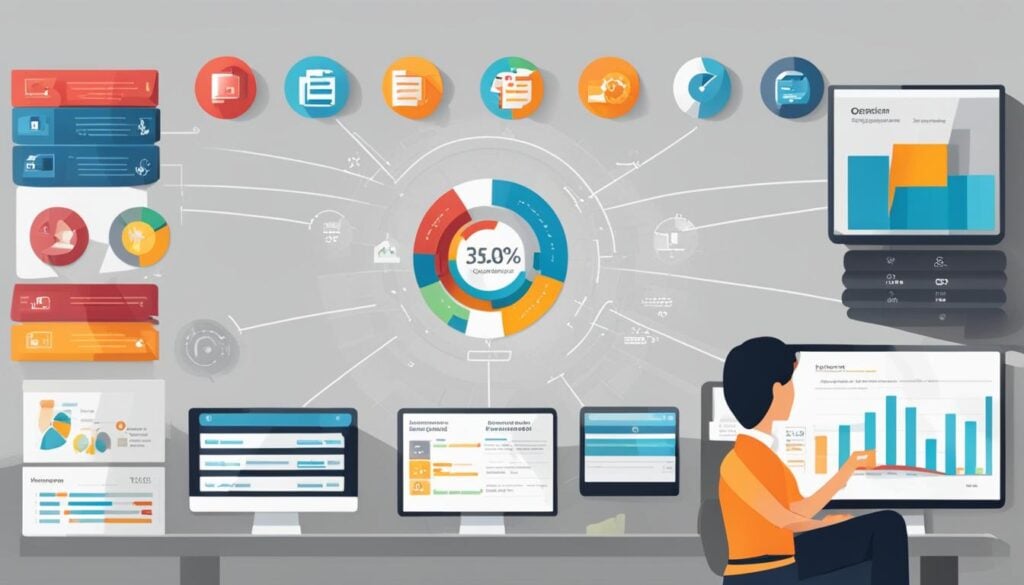
CRM software enables businesses to efficiently store and organize customer data in a centralized database. This allows for easy access to valuable customer information, including contact details, transaction history, preferences, and interactions. With a comprehensive view of customer data, businesses can quickly address customer inquiries, personalize communication, and ensure smooth service delivery.
One of the key advantages of CRM is its ability to automate repetitive tasks, such as data entry, follow-up reminders, and email responses. By automating these tasks, businesses can save time and free up resources to focus on more strategic activities, such as building relationships, identifying sales opportunities, and analyzing customer behavior.
Enhanced Sales Processes
CRM facilitates efficient management of the sales pipeline. By capturing and tracking interactions with leads and prospects, businesses can prioritize and nurture leads effectively. CRM software provides automated lead scoring and routing features, increasing sales efficiency and ensuring that valuable leads are not overlooked. Sales representatives can access real-time data, monitor progress, and make data-driven decisions to optimize sales performance.
Personalized Marketing Efforts
With CRM, businesses can segment their customer base and create targeted marketing campaigns. By analyzing customer data, businesses can gain insights into customer preferences, interests, and purchase history, allowing for personalized marketing messages and offers. This personalized approach increases the likelihood of conversions and builds stronger customer relationships, leading to higher customer retention rates.
Furthermore, CRM platforms often integrate with email marketing tools, allowing businesses to automate email campaigns based on predefined triggers. This ensures timely and relevant communication with customers, improving engagement and customer satisfaction.
Support for Scalability and Growth
Efficient management of customer relationships and data through CRM lays a solid foundation for business growth. As businesses expand, the accessibility and organization of customer data become increasingly critical. CRM software provides the necessary scalability to accommodate growing customer databases, ensuring that businesses can continue to provide excellent customer service and maintain relationships as they scale.
In summary, effective CRM implementation enables small businesses to optimize customer data management, enhance retention rates, and drive efficient business operations. By centralizing customer information, automating tasks, and leveraging data-driven insights, businesses can nurture customer relationships, improve sales processes, personalize marketing efforts, and achieve sustainable growth.
Increase Efficiency
Implementing a CRM system can significantly increase efficiency in your small business by automating tasks and freeing up more time for strategic activities. With CRM, you can streamline repetitive processes, allowing your team to focus on more important tasks that drive growth.
One of the key benefits of CRM is its ability to centralize all customer information. Instead of searching through multiple systems or spreadsheets, you can easily access customer data in one centralized location. This saves time and ensures that your team has quick and easy access to the information they need to deliver personalized customer experiences.
Additionally, CRM systems offer robust reporting and analytical capabilities. By generating reports and insights, CRM provides valuable data that can be used to make informed decisions and continuously improve your business operations. These insights help identify trends, optimize processes, and drive greater efficiency.

Save Money
Implementing a customer relationship management (CRM) system can effectively save money for small businesses. By optimizing business processes and centralizing information, CRM streamlines operations and drives cost savings.
One way CRM helps small businesses save money is by reducing the chances of missing important details. With a CRM system in place, businesses have a centralized repository for all customer information, making it easier to track and follow up on sales and customer leads. This leads to improved efficiency in sales processes, minimizing missed opportunities and potential revenue loss.
Moreover, CRM ensures timely and effective communication with customers, resulting in higher customer satisfaction levels. By centralizing customer histories, preferences, and interactions, businesses can provide personalized and prompt support, resulting in customer loyalty and repeat business. Satisfied customers are more likely to refer others to your business, expanding your customer base and increasing revenue.
Another cost-saving aspect of CRM is its ability to streamline internal processes. By automating repetitive tasks and workflows, businesses can reduce manual labor and allocate resources more efficiently. This not only saves time but also lowers operational costs.
By integrating CRM with other organizational systems and software, businesses can further optimize their processes, reducing duplication of efforts and ensuring data consistency. For example, integrating CRM with accounting software can eliminate the need for manual data entry, saving time and minimizing errors.
Overall, CRM empowers small businesses to operate more efficiently and economically. By centralizing and organizing customer information, improving communication, and automating tasks, CRM enables businesses to maximize their resources and achieve tangible cost savings.

Reports
One of the key advantages of using a CRM system is the ability to generate detailed and insightful reports. These reports provide a comprehensive view of customer data and sales performance, allowing you to make data-driven decisions for your business. By leveraging CRM reports, you can gain valuable insights into customer behavior, analyze sales trends, and evaluate the effectiveness of your marketing campaigns.
CRM reports eliminate human biases and errors that may arise when organizing and analyzing data manually. Instead of spending hours collecting and organizing data, the CRM system automatically compiles and presents the information in a structured and easily digestible format. This saves you time and effort, enabling you to focus on more important tasks such as developing strategies, nurturing customer relationships, and driving business growth.
By pulling reports directly from the CRM system, you can access up-to-date and accurate information in real-time. This allows you to stay informed about the current state of your business and make informed decisions based on the latest data. Whether you need to analyze customer demographics, measure the success of a marketing campaign, or forecast future sales, CRM reports provide the necessary insights to drive your business forward.
With CRM reports, you can efficiently organize and present data, making it easier to identify patterns, trends, and opportunities. These reports can be customized to suit your business needs, allowing you to focus on specific metrics or key performance indicators. Whether you want to track customer retention rates, monitor sales pipeline progress, or analyze customer satisfaction levels, CRM reports provide the necessary information to monitor and optimize your business processes.

By leveraging the power of CRM reports, you can save time, improve data organization, and make data-driven decisions that will ultimately enhance the efficiency and success of your small business.
Using CRM for Small Business Growth
CRM, or Customer Relationship Management, is a powerful tool for driving small business growth. By effectively managing customer relationships, optimizing sales processes, and running targeted marketing campaigns, CRM enables businesses to thrive in today’s competitive landscape.
One of the key benefits of CRM is its ability to improve lead generation. With CRM, you can efficiently capture and track leads, ensuring that no opportunity slips through the cracks. By organizing leads in a sales pipeline, you can prioritize follow-ups and move prospects through the sales funnel more effectively.
Moreover, CRM helps you close more deals. By providing access to comprehensive customer data and insights, CRM empowers you to tailor your sales approach and deliver personalized experiences. This not only enhances customer satisfaction but also increases your chances of converting leads into paying customers.
In addition to driving sales, CRM plays a crucial role in optimizing marketing campaigns. With CRM, you can segment your customer base, enabling you to tailor your marketing messages to specific groups. This results in more targeted and effective campaigns, leading to higher conversion rates and improved return on investment.
Furthermore, CRM enables you to adapt quickly to changing market dynamics. With real-time data and analytics at your fingertips, you can make data-driven decisions and stay ahead of the competition. By identifying trends and patterns, you can adjust your strategies and seize opportunities for growth.
To visualize the impact of CRM on small business growth, consider the following scenario:
Example Scenario: ABC Electronics
ABC Electronics, a small consumer electronics retailer, implemented a CRM system to streamline their sales and marketing processes. By capturing and organizing customer data in a centralized CRM platform, they gained a comprehensive view of their customers.
Using the CRM’s sales pipeline feature, ABC Electronics was able to effectively track leads, prioritize follow-ups, and close deals more efficiently. They also utilized segmented marketing campaigns to target specific customer groups, resulting in increased engagement and higher conversion rates.
The CRM system provided ABC Electronics with valuable insights into their customers’ preferences and behaviors. By analyzing the data, they were able to identify trends, adjust their product offerings, and stay ahead of the competition.
Ultimately, with the help of CRM, ABC Electronics experienced significant growth in their sales revenue and customer base. The efficient management of customer relationships, optimized sales processes, and targeted marketing campaigns propelled their business forward.
In conclusion, CRM is a vital tool for small business growth. By leveraging its capabilities, you can improve lead generation, close more deals, and run effective marketing campaigns. CRM also enables you to adapt to market changes and maintain a competitive edge. To achieve sustainable growth in today’s business landscape, harness the power of CRM for your small business.
Embrace a Small Business CRM
Small businesses can greatly benefit from utilizing a CRM specifically designed to meet their unique needs. A small business CRM provides a range of features and functionalities that empower you to enhance your business operations and drive lasting success.
360-Degree Customer View
A small business CRM offers a comprehensive 360-degree view of your customers, allowing you to gain valuable insights into their preferences, behaviors, and interactions with your business. With a holistic view of your customers, you can deliver personalized experiences and build stronger relationships.
Task Automation
Automation is at the core of a small business CRM, enabling you to streamline repetitive tasks and workflows. By automating tasks such as data entry, follow-ups, and lead nurturing, you can save time and ensure consistency in your operations, freeing up resources to focus on strategic initiatives.
Data-Driven Decision-Making
A small business CRM empowers you to make informed decisions based on data-driven insights. By analyzing customer data, sales metrics, and marketing performance, you can identify trends, patterns, and opportunities, allowing you to optimize your strategies and drive meaningful business outcomes.
Optimized Reporting
With a small business CRM, generating comprehensive reports becomes effortless. You can easily access accurate and up-to-date information on sales, customer interactions, and marketing campaigns, eliminating the need for manual data organization and saving time for more critical tasks.
Mobile Accessibility
A small business CRM provides mobile accessibility, enabling you and your team to access important business information on the go. Whether you’re meeting a client, attending an event, or working remotely, you can stay connected and stay competitive by accessing your CRM from any device, anytime, anywhere.
Implementing a small business CRM is a strategic investment that enhances your operational efficiency, fosters growth, and sets the foundation for long-term success. By leveraging the power of a tailored CRM solution, you can nurture leads, make data-driven decisions, and maintain a competitive edge in today’s dynamic business landscape.
Conclusion
CRM integration plays a vital role in improving efficiency and streamlining customer relations for small businesses. By carefully selecting the appropriate integration, you can automate tasks, centralize information, and save valuable resources. CRM software offers a wide range of benefits, including enhanced customer relationships, increased operational efficiency, and valuable data-driven insights.
Embracing a small business CRM solution is crucial for fostering growth and achieving success in today’s highly competitive market. By leveraging CRM technology, you can effectively manage customer interactions, optimize sales processes, and drive targeted marketing campaigns. A small business CRM empowers you to generate and nurture leads, make data-driven decisions, and stay ahead of the competition.
In conclusion, implementing a CRM integration and embracing a small business CRM solution are essential steps towards maximizing your business’s potential. By harnessing the power of CRM, you can enhance efficiency, build stronger customer relationships, and drive sustainable growth. Invest in a CRM for small businesses today and unlock a world of opportunities for your business.
FAQ
Q: What is CRM and why is it important for small businesses?
A: CRM, or Customer Relationship Management, is a method that helps businesses manage customer interactions to enhance customer satisfaction. For small businesses, CRM is important because it allows them to track customer data, segment customers for personalized marketing, and provide better customer service.
Q: How can integrating a CRM benefit my small business?
A: Integrating a CRM into your small business can improve customer data management by tracking contact information and purchase history. It also enhances customer service by providing quick access to customer information. Additionally, a CRM helps automate lead generation, identification of hot leads, and targeted marketing campaigns.
Q: How do I select the right CRM integration for my business?
A: When choosing a CRM integration for your small business, consider the software applications you frequently use and the tasks you want to automate. Make a list of your most-used applications and determine the budget for integration. Free and paid integrations are available, each with its own features and limitations.
Q: What are some tips for successfully implementing a CRM integration?
A: To successfully implement a CRM integration, ensure that your CRM and ERP data is synchronized. Consider using an integration platform to streamline the process. Automate tasks and workflows to save time and improve efficiency. Get help from experts to ensure a smooth integration process.
Q: How can CRM software benefit my small business?
A: CRM software provides small businesses with centralized customer data, enabling personalized engagement and improving customer relationships. It facilitates efficient communication within the team and enhances lead management. CRM software offers automation, data-driven insights, and optimization of sales processes, leading to scalable growth and competitive advantage.
Q: What role does CRM play in small business growth?
A: CRM plays a crucial role in small business growth by managing customer relationships, optimizing sales processes, and facilitating targeted marketing campaigns. It helps businesses improve lead generation, close more deals, and increase revenue. CRM also enables businesses to adapt quickly to changing market dynamics and maintain a competitive edge.
Source Links
- https://evolvedmetrics.com/benefits-of-crm-software-for-small-businesses/
- https://www.linkedin.com/pulse/boosting-efficiency-top-crm-integrations-small-businesses
- https://expersight.com/boosting-business-efficiency-and-growth-with-a-small-business-crm/
