

As a professional in the realm of digital marketing, you’re likely aware that navigating the intricate labyrinth of data protection is more critical than ever. With the inception of GDPR (General Data Protection Regulation) on May 25, 2018, the rules of the game have significantly changed, particularly in how you utilize marketing automation software. GDPR compliance for marketing automation requires a steadfast commitment to upholding strengthened conditions for obtaining consent and ensuring robust data protection protocols.
The GDPR regulations mandate a clear shift in strategy: gone are the days of leveraging purchased lists for email campaigns. Instead, you must now secure explicit opt-in consent from your prospects and customers, meticulously recording the details of their permissions. This ensures transparency and governs the ethical use of personal data. Additionally, GDPR insists on the ease of withdrawing consent, echoing the sentiment that customer trust is paramount in today’s data-driven marketplace.
In this labyrinth, ensuring your marketing automation software aligns with GDPR is not just about following the letter of the law—it’s about redefining the customer experience with respect and integrity. With these new compliance standards, the fabric of digital marketing is evolving to be more consent-based and user-focused, a change that can ultimately cultivate deeper engagements and more meaningful connections with your audience.
Key Takeaways
- GDPR compliance for marketing automation is imperative for all digital marketers.
- Strengthened consent conditions require clear opt-in protocols and record-keeping.
- The era of using purchased data lists is over—transparency and trust are key.
- Data protection and privacy by design ensure robust security across marketing technologies.
- Your marketing must pivot to become more consent-based and user-focused under GDPR.
- Aligning with GDPR is an opportunity to deepen customer trust and engagement.
The Essential Role of Consent in Marketing Automation
In the current digital landscape, your marketing strategies must respect users’ data while achieving business objectives. With GDPR compliance for marketing automation, the spotlight falls squarely onto the practices of securing customer consent. This singular act of permission not only satisfies the legal requirements but also forms the backbone of customer trust in your brand.
Understanding the Enhanced Requirements for Consent
GDPR has raised the bar on consent management to new heights. Instead of the previous implied consent models, GDPR mandates that consent must be explicit, informed, and unambiguous. This means you need to communicate the purposes of personal data processing in clear, straightforward language, ensuring that your users comprehend exactly what they’re agreeing to. Moreover, consent under GDPR is not a one-time ticket—it needs to be as easy to withdraw as to give, holding user autonomy in high regard.
Implementing Opt-in Protocols for Data Collection
Crafting GDPR-compliant forms for your marketing endeavors is not just about legal adherence—it’s about instilling transparency at the point of data collection. Your forms should avoid convoluted terms and conditions in favor of simplicity and clarity. The inclusion of unticked opt-in checkboxes is critical, preventing any pre-assumed consent. These protocols serve not only as a compliance guideline but also as a reflection of your integrity in consent management.
Recording Consent: The What, When, and Where
To navigate the new terrain of GDPR, maintaining detailed records of user consents becomes vital. Whether it’s through your website, email campaigns, or other marketing channels, you are responsible for documenting the specifics of each consent—including the timing and the context in which it was given. This proactive approach to recording consents acts as your safety net, providing verifiable evidence of compliance should it ever be challenged.
- Ensure your marketing automation exemplifies GDPR compliance by harnessing explicit user consent.
- Revamp your data collection forms to incorporate clear, user-friendly opt-in protocols.
- Keep precise records of what consent was given for, when it was granted, and where the agreement occurred.
Remember, in the journey toward GDPR compliance, your actions establish the trust that customers place in your brand—make consent the cornerstone of your marketing automation strategy.
Customizing User Control: Preference Centers and Consent
As the digital landscape evolves, so does the need for tighter data privacy and consent management measures. For your marketing automation software to remain on the right side of GDPR, it’s not just about personal data processing—it’s also about putting the power back in your users’ hands. Meeting these stringent requirements can indeed seem daunting, but it opens a doorway to fostering deeper trust between your brand and its customers.
Understanding and incorporating user consent preference centers into your online platforms ensures that user autonomy is at the core of your operations. A well-designed preference center is more than a compliance tool; it is a statement of your commitment to user-centric data privacy.
Facilitating Easy Withdrawal of Consent
Under GDPR, withdrawing consent should be as effortless as giving it. In practice, this means that each email, notification, or message from your marketing campaigns must allow users a clear, simple way to unsubscribe. This process should be intuitive, ensuring that even users who are not tech-savvy can navigate it with ease. Remember, honoring a user’s wish to withdraw consent is not just a legal obligation—it’s a respect for their choices and privacy.

Designing User-Friendly Preference Centers
Preference centers serve as the hub for consent management, allowing users to tailor their interaction with your brand. This is where you can shine by offering customization of the content they would like to receive. By creating a user-friendly preference center, you allow for a tailored experience that respects both the user’s interest and their personal data privacy.
- Incorporate clear, straightforward options, allowing users to manage their email preferences, such as newsletters, product updates, or event invitations.
- Enable users to choose the frequency of communications or even the type of content formats they prefer.
- Make sure the preference center is easily accessible from your website and within each marketing communication you send out.
By cleverly using preference centers, you ensure compliance while enhancing user experience—a win-win in the modern marketing environment.
Data Protection: Your Blueprint for GDPR-Compliant Marketing Data
As you harness the wealth of customer information available through marketing automation, your actions must be guided by a robust framework for data protection. Observing GDPR regulations is not only about compliance; it’s about evolving your systems to respect the nuances of personal data processing, maintaining the integrity of data management, and protecting the rights of individuals. Your marketing data strategy should ensure that every piece of personal information is treated as a valued asset, with the right protocols in place to manage it effectively.

One of the pillars of GDPR is giving individuals control over their personal data, setting up marketing practices that are transparent and aligned with data protection ethics. The legislation has added new layers to the customer-centric approach, with specific demands on marketers including the ability to delete customer data when requested. Here’s what you need to know about embedding impeccable data protection into your marketing automation practices.
Ensuring Data Erasure through ‘The Right to be Forgotten’
In the digital age, the ‘right to be forgotten’ shapes how customer data is viewed and handled. Your customers have the right to request the deletion of their personal data, in which case you must be able to execute a complete data erasure across every platform. Not only is this an essential element of personal data processing respect, but it’s also a mandate that requires meticulous attention and response. Ensure your GDPR compliance checklist includes detailed processes for data erasure to uphold this fundamental user right.
Mapping the Data Journey Across Your Tech Stack
A deep dive into your marketing tech stack will likely reveal the complexity of data flows within your organization—from collection to analysis to storage. A key aspect of GDPR compliance is understanding and documenting this journey in its entirety. By mapping the paths that customer data travels through your systems, you are better prepared to respond to requests for data erasure or management. Audit your internal processes, work with your tech partners, and understand the intricacies of data interaction within your stack to build a seamless GDPR compliance framework capable of respecting user privacy in all aspects of personal data processing.
- Integrate GDPR regulations into every stage of your marketing automation to elevate data protection standards.
- Adopt a GDPR compliance checklist that thoroughly accounts for ‘the right to be forgotten’ and complete data erasure capabilities.
- Ensure continual monitoring and mapping of personal data processing throughout your tech stack.
By fortifying the pillars of customer data rights and protection within your approach to marketing automation, you not only adhere to GDPR regulations but also fortify the trust customers place in your brand. A transparent, responsible treatment of personal data is the benchmark of excellent digital marketing practices in a GDPR-compliant world.
Transparency and Access: Honoring Customers’ Data Rights
In today’s digitized marketplace, adhering to GDPR compliance for marketing automation has become a cornerstone of trustworthy customer relations. A key element of the GDPR regulations is ensuring that your customers are fully aware of and can access information on how their data is being processed. As a marketing professional, it’s your obligation to provide a transparent account of the data flow within your marketing automation software—upholding the data privacy rights of your consumers.
Respecting your customer’s rights goes beyond legal compliance; it’s about valuing their data privacy concerns as part of their overall experience with your brand. GDPR regulations essentially mandate a level of openness that was not standard practice before, compelling your enterprise to align with these new expectations of data transparency and access.
- Enable customers to see the purpose and scope of data collected.
- Allow access to personal data upon request.
- Offer clarity on where and how personal data is used and stored.
- Explain the sharing of data with third parties, if applicable.

You must ensure that the right systems are in place for customers to retrieve their personal data. This could involve creating user portals or designing automated account management features within your marketing automation software. The goal is to integrate GDPR compliance seamlessly into the user experience, strengthening trust and reinforcing your commitment to their privacy rights.
Additionally, the GDPR’s emphasis on transparency and access affords you the opportunity to differentiate your brand as one that champions user empowerment—a valuable competitive advantage. Ultimately, your marketing practices not only satisfy GDPR compliance but also contribute to a broader culture of respect and accountability when it comes to data privacy.
Securing Personal Data: Privacy by Design and Default
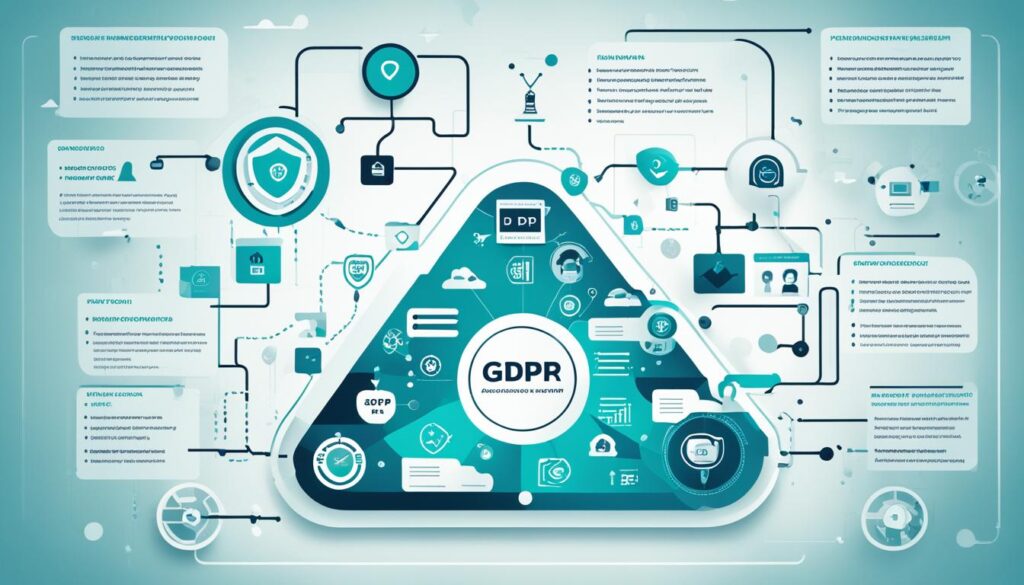
In fostering GDPR compliance for marketing automation, a pivotal factor is securing personal data with privacy by design and default. This approach, now a legal requisite under GDPR regulations, ensures that data security is an integral part of not only your marketing automation software but all processes from the onset.
Privacy by design demands that GDPR compliance is considered at every stage of product development, ensuring that data protection is not a retrospective add-on, but a foundational feature. As you continue to leverage data-driven strategies, it becomes essential to integrate these high data security standards into your marketing tech stack proactively.
- Inspect and enhance security protocols across platforms where personal data is processed or stored.
- Implement technical measures like encryption and anonymization to protect data from the moment of collection.
- Ensure that any third-party services used comply with GDPR’s strict data protection norms.
To ensure ongoing GDPR compliance for marketing automation, it is imperative to regularly evaluate these security practices. By acknowledging data security as a default stance, you reinforce the trust your users have in your brand’s respect for their privacy rights and in your commitment to protecting their personal data.
- Conduct integrity checks and routine audits of data processing activities within your marketing automation tools.
- Establish a responsive strategy for data breach incidents, including timely notification to authorities and affected individuals.
Safeguarding personal data with privacy by design and default does not merely satisfy GDPR regulations—it is a strategic investment into the credibility and long-term success of your marketing endeavors. Championing data security in every aspect of your marketing automation software will not only prevent legal repercussions but also engender a culture of trust that can powerfully distinguish your brand in the market.
GDPR Compliance for Marketing Automation: Building a Solid Framework
As you integrate marketing automation into your business strategies, GDPR compliance cannot be overlooked. Thoroughly rooting your system in GDPR regulations safeguards not just your customers’ data, but the credibility of your brand as well. Embrace a GDPR compliance checklist to ensure that your steps towards data protection are comprehensive and systematic.
Focusing on compliance guidelines while configuring your marketing automation sustains the promise of data integrity and security. To further your journey towards GDPR adherence, vigilance is key—collect only the data that is absolutely essential and maintain clarity in its usage.

- Conduct an extensive review of current data handling processes to identify areas for improvement.
- Implement privacy impact assessments to evaluate potential risks to personal data.
- Map out your marketing automation tech stack to trace the flow and storage of customer data.
- Develop clear documentation for each data processing activity, ensuring transparency.
- Create incident response plans to address potential data breach scenarios immediately.
- Build a culture of data protection awareness within your team to foster accountability.
- Regularly update your GDPR compliance checklist to keep pace with evolving regulations and compliance guidelines.
- Ensure seamless communication channels for customers to inquire about their data and its usage.
Remember, adherence to GDPR is not a static achievement but a continuous effort to meet compliance guidelines. By proactively establishing a robust framework for data protection, you are positioning your marketing automation not only as compliant but as a bastion of trust for your users.
Navigating GDPR Regulations: Adapting Marketing Automation Software for Compliance
In the era of data-driven marketing, the importance of adapting your marketing automation software to comply with GDPR regulations cannot be overstated. As these regulations redefine the boundaries of data privacy, they require a shift in your digital strategy to prioritize consent management and transparency.
The Importance of a Transparent and Fair Privacy Policy
Your marketing automation software should be the beacon of trust for customers, with a privacy policy that clearly elucidates how you collect, handle, and use personal data. Transparency not only complies with GDPR but also reassures your users that their data is in safe hands. You must inform your users, in unequivocal terms, the exact nature of data being collected and the purposes for which it is processed. This transparency is crucial for building a foundation of trust and accountability between your brand and its customers.
Embedding Consent Functionality in Automation Tools
Within the spectrum of GDPR compliance for marketing automation, consent management plays a pivotal role. Every marketing automation tool at your disposal should come equipped with features that facilitate the seamless acquisition of user consent. It is imperative to integrate mechanisms that document the giving, withholding, and retracting of consent in a visible and accessible manner. These functions are not just technical requisites; they are the cornerstones of respecting and protecting the consumer’s right to privacy.
To harmonize your marketing strategies with GDPR, your marketing automation software must reflect diligence in acquiring documented, explicit consent. This means having easily accessible and revocable consent forms that align with data privacy norms. Subsequently, automated communications must include clear options for users to manage their data preferences, such as unsubscribing or adjusting personalization settings, reinforcing user sovereignty over their personal information.
- Establish a transparent and fair privacy policy that satisfies GDPR’s standards for clarity and accessibility.
- Embed consent functionality directly into your marketing automation software, ensuring GDPR compliance and respect for user autonomy.
- Incorporate clear options in automated messages for users to effortlessly unsubscribe or modify data preferences, as required by GDPR.
- Maintain a proactive approach toward consent management, pivotal to preserving customer trust and compliance with data privacy regulations.
Integrating these practices into your marketing automation processes transcends legal obligation— it marks your commitment to responsible marketing in a world where consumer data protection is paramount.
Marketing Analytics Under GDPR Scrutiny
As the GDPR tightens the clamps on data processing, the role of marketing analytics comes under intense scrutiny. You must strike a delicate balance, optimizing the potency of analytics while upholding the stringent data security measures established by GDPR regulations. It’s about ensuring that every byte of customer data used for gleaning insights is treated with the utmost care, fulfilling both the ethical and compliance obligations of your marketing automation systems.
Being GDPR-compliant in your marketing analytics efforts is more than just red tape—it’s a commitment to data protection by design. The onus is on you to employ encryption, correct access controls, and other robust data security protocols that respect and protect individual privacy rights. With GDPR at the forefront, the days of carefree data analytics are replaced by strategic, thoughtful maneuvers through a landscape shaped by privacy concerns.
- Analyze where and how data is collected in your marketing automation to ensure GDPR compliance.
- Conduct regular audits to verify that data processing practices meet GDPR’s requirements for data protection.
- Review and strengthen the security of your analytics tools, focusing on potential vulnerabilities that could risk data integrity.
- Update your data security policies and team training to reflect the latest GDPR regulations and best practices.
- Prepare a streamlined process for responding to data subjects’ requests in accordance with GDPR protocols.
The landscape of data security is ever-changing, and GDPR compliance for marketing automation demands that you stay informed and agile. By integrating these careful practices into your marketing analytics, you’re not just adhering to the law, but also forging a path of trustworthiness and accountability in the digital market space. Your analytics can still drive business growth, provided they operate within the regulated bounds of GDPR.
Creating a GDPR Compliance Checklist: Prioritizing Tasks and Deadlines
As you venture to integrate GDPR regulations into your marketing automation software, a pivotal step is to develop a GDPR compliance checklist. This strategic outline will help you prioritize your tasks efficiently and stick to stringent deadlines, fostering ongoing compliance and data protection practices.
Regular Audits and Assessments: Ensuring Ongoing Compliance
Your GDPR compliance is not a one-off activity; it requires continuous vigilance and regular audits. Ensuring that your marketing automation practices align with privacy laws means conducting frequent assessments to address new risks or changes in your data processing activities. These scheduled audits are vital to maintaining the security and integrity of personal data within your systems and to demonstrate your commitment to rigorous data protection standards.
- Review your data collection methods to verify lawful consent.
- Evaluate your data storage and retention policies for compliance with GDPR requirements.
- Check third-party vendors and partners to ensure they adhere to GDPR regulations.
- Assess the effectiveness and clarity of your privacy notices and consent forms.
- Update your data protection impact assessments as needed when introducing new marketing campaigns or tools.
The Role of the Data Protection Officer in GDPR Compliance
An integral part of your GDPR compliance framework is the appointment of a dedicated Data Protection Officer (DPO). This role is crucial in overseeing the execution of your compliance guidelines and managing your marketing automation’s data protection strategy. The DPO’s expertise is instrumental in navigating the complexities of GDPR and ensuring that your practices meet compliance criteria at every stage.
- Maintain open communication with your DPO to stay updated on GDPR developments.
- Lean on the DPO’s insights for implementing best practices in data security and consent management.
- Work with your DPO to train staff and mitigate risks associated with data processing.
Remember, your GDPR compliance checklist is your roadmap to responsible marketing automation. By prioritizing tasks, respecting deadlines, performing regular audits, and leveraging the expertise of your DPO, you can navigate GDPR regulations with confidence, ensuring that your marketing automation efforts are both effective and legally compliant.
Conclusion
The journey towards GDPR compliance for marketing automation is an ongoing process that is transformative not only from a legal standpoint but also from a strategic perspective. By embracing systematic consent management, data protection, user-friendly preferences, transparent data policies, and diligent monitoring, you position your marketing automation software as a beacon of trust and responsibility. GDPR regulations might initially present a challenge, but with the correct strategies in place, they serve as an impetus for deepening customer trust and securing their data.
Data protection, a fundamental aspect of GDPR regulations, is a pivotal concern that your marketing automation software needs to address head-on. With these regulations acting as a framework for your marketing activities, you have the opportunity to refine your approach and reassure users that their personal information is being protected with the utmost care. In essence, GDPR compliance is a reflection of your brand’s integrity and commitment to privacy.
As we transition into a GDPR-compliant future, remember that compliance is not just about meeting regulatory demands; it’s about elevating the standard of your marketing automation software to foster confidence among users. The path ahead calls for adaptation, oversight, and a dedicated approach to privacy that reassures your stakeholders of your ability to safeguard their interests in this digitally driven world.
FAQ
What are the key factors to ensure GDPR compliance in marketing automation?
To ensure GDPR compliance in marketing automation, you must obtain informed consent for personal data processing, document the consent details, offer clear ways for users to withdraw consent, manage data deletion requests effectively, maintain transparency about data usage, and integrate privacy and security by design into your marketing automation software.
How has consent management changed with GDPR in the context of marketing automation?
With GDPR, consent management now requires explicit and informed opt-ins from users, clear communication about the use of their data, easily accessible consent withdrawal options, and meticulous record-keeping of when, where, and how consent was given. Moreover, consent should be specific for different types of data processing activities and easily revocable by the user.
What does the right to be forgotten mean for marketing departments?
The right to be forgotten gives individuals the power to request the deletion of their personal data. Marketing departments must ensure that they can completely erase a user’s data from their system and any third-party services they use. This requires a deep understanding of the data journey within the marketing tech stack and the capability to remove data upon request.
What is required for a privacy policy to be compliant with GDPR?
A GDPR-compliant privacy policy must be transparent, concise, and written in clear language. It should inform customers about what personal data is being collected, how it is processed, stored, and shared, and the rights customers have, including how they can access their data or request its deletion. Privacy policies should also explain the purpose of data processing and the legal basis for it, including how users can withdraw their consent.
How do I integrate GDPR compliance into my marketing analytics processes?
You should ensure that all data collection and analysis activities comply with GDPR by processing only the data that is necessary and has consent. This involves implementing data minimization principles, ensuring data accuracy, having clear data storage and retention policies, and encrypting personal data to protect it from breaches. Additionally, transparency in how analytics data is processed and the intention behind it is key.
What should be included in a GDPR compliance checklist for marketing automation?
A GDPR compliance checklist should include tasks like conducting regular data protection impact assessments, keeping a record of consent, ensuring all marketing automation tools are GDPR compliant, having a data breach response plan, appointing a Data Protection Officer (DPO) if required, and regularly reviewing and updating data protection policies and procedures to maintain compliance.
What are the responsibilities of a Data Protection Officer (DPO) in ensuring GDPR compliance in marketing automation?
A Data Protection Officer (DPO) oversees the proper implementation of GDPR regulations within an organization. The DPO ensures that the company’s marketing automation practices comply with GDPR, educates the staff on compliance requirements, monitors adherence to the regulation, assesses the impact of new marketing technologies on data privacy, and serves as the point of contact for supervisory authorities and individuals whose data is being processed.
How should companies handle data breaches under GDPR?
Companies must report personal data breaches to the appropriate supervisory authority within 72 hours of becoming aware of the breach, if it poses a risk to the rights and freedoms of individuals. Additionally, if the breach poses a high risk to these individuals, they must also be notified without undue delay. Organizations must document all data breaches, their effects, and the remedial actions taken. Having a solid incident response plan is crucial for compliance.
