

A robust SEO marketing strategy is crucial for agencies that want to achieve success in the digital landscape. With 75% of users never venturing beyond the first page of search results, it’s clear that ranking at the top is essential. To achieve this, agencies need to implement effective SEO strategies tailored to their specific needs and goals.
Optimizing SEO for agencies involves various components, including:
- Implementing agency SEO services that focus on search engine optimization for agencies
- Utilizing SEO agency solutions designed to boost website visibility and organic traffic
- Creating relevant, long-tail keywords that align with the target audience’s search intent
- Developing in-depth site content that establishes the agency as an industry authority
- Ensuring a fast-loading website for optimal user experience
- Designing a user-focused website with intuitive navigation and engaging visual elements
- Adopting a responsive design to cater to users accessing the site on different devices
- Implementing SEO analytics to track the progress and effectiveness of the SEO strategy
By implementing these strategies, agencies can optimize their online presence, improve search rankings, and drive valuable organic traffic to their site. Let’s dive deeper into each of these components and explore how they contribute to agency success.
What is an SEO Marketing Strategy?
An SEO marketing strategy is a comprehensive plan aimed at optimizing your website for search engine optimization. By implementing a well-defined strategy, you can improve your search rankings, increase organic traffic, and achieve higher conversions. To effectively optimize your site, you need to focus on various key elements, such as:
1. Relevant, Long-Tail Keywords: Incorporating relevant, long-tail keywords throughout your website helps to attract targeted organic traffic and optimize your content for specific search queries.
2. In-Depth Site Content: Creating high-quality, informative content that goes beyond surface level provides value to your audience and enhances your website’s authority in search engine rankings.
3. Fast-Loading Website: Optimizing your website’s load time is crucial for improved user experience and reduced bounce rates. A slow-loading site can negatively impact your search rankings and user satisfaction.
4. User-Focused Design: Prioritizing user experience by designing your website with easy navigation, clear headers, and visually appealing elements helps to engage visitors and increase their time spent on your site.
5. Responsive Design: Ensuring your website is responsive and adapts to different devices, including mobile phones and tablets, is essential for reaching a larger audience and improving overall user experience.
6. Voice Search Optimization: Optimizing your site for voice searches enables you to capture potential traffic from voice-activated assistants like Siri, Alexa, and Google Assistant.
7. Local SEO: Implementing local SEO techniques helps businesses target customers in specific geographical areas and enhance their visibility in local search results.
8. SEO Analytics: Monitoring and analyzing SEO metrics such as organic traffic, search rankings, and website performance using tools like Google Analytics and Ahrefs can help you track progress and make data-driven decisions.
By incorporating these elements into your SEO marketing strategy, you can optimize your website effectively, improve search rankings, drive organic traffic, and ultimately achieve higher conversions. Remember, a well-executed SEO strategy requires ongoing monitoring and adjustments to stay ahead in the competitive online landscape.
Relevant, Long-Tail Keywords
To rank in relevant search results, your agency needs to focus on relevant, long-tail keywords. These keywords, consisting of three or more words, are crucial for capturing the search intent of users. By conducting thorough keyword research using tools like Buzzsumo or KeywordsFX, you can uncover the right long-tail keywords to optimize your agency’s SEO strategy.

In-Depth, Quality Site Content
Creating in-depth, quality content is a key pillar of a successful SEO strategy. By providing valuable and informative content, you can establish your agency as an authoritative source and drive valuable traffic to your website. Quality content not only helps to boost your search engine rankings but also engages your audience and builds trust with potential customers.
When creating content, it’s important to focus on topics that are relevant to your industry and target audience. Conducting thorough keyword research will help you identify the right topics and ensure that your content aligns with the search intent of your audience. This targeted approach will increase the chances of your content being discovered by users who are actively searching for information related to your services.
Additionally, diversifying your content formats can help you cater to the preferences and needs of different audience segments. Consider leveraging various content formats such as:
- Videos: Visual content like videos can be highly engaging and shareable, helping you connect with your audience on a deeper level.
- Blogs: Blog posts allow you to provide in-depth information, insights, and thought leadership on industry-related topics.
- Infographics: Infographics are visually appealing and can effectively communicate complex information in a digestible format.
- Articles: Publishing articles on authority websites within your industry can help you expand your reach and establish credibility.
- Ebooks: Creating downloadable ebooks allows you to offer comprehensive and in-depth resources that provide value to your audience.
By incorporating these different content formats into your strategy, you can cater to various learning styles and engage your audience effectively. Remember, the key to success lies in creating valuable content that addresses the pain points and challenges of your target audience.
When developing your content, always keep in mind that quality should never be compromised. Ensure that your content is well-researched, accurate, and provides actionable insights. Additionally, optimize your content for SEO by incorporating relevant keywords, meta tags, and descriptive titles.

Fast-Loading Website
To provide an excellent user experience, it is crucial for an agency’s website to load quickly. A website that takes more than three seconds to load can frustrate visitors and lead to a high bounce rate. Additionally, a slow-loading website can negatively impact your SEO rankings. To ensure your website loads in a timely manner, it’s essential to evaluate and improve its load time.
One useful tool for assessing your website’s load time is Google PageSpeed Insights. This tool analyzes your website and provides recommendations for optimizing its performance. By following these suggestions, you can significantly enhance your website’s load time and overall user experience.
Optimizing your website’s load time offers several advantages. First and foremost, it enhances user satisfaction. When users can quickly access your website, they are more likely to stay, explore further, and engage with your content. This, in turn, can lead to higher conversions and better overall performance.

In addition to improving user experience, optimizing load time can positively impact your SEO rankings. Search engines like Google consider page speed as a ranking factor, and a fast-loading website can help you climb the search engine results pages (SERPs).
By reducing your website’s load time, you can lower your bounce rate and increase user engagement. Visitors are more likely to stay on your site and explore multiple pages when they experience fast-loading pages. This extended engagement signals search engines that your website is valuable and relevant, which can lead to improved organic rankings.
User-Focused Design
When it comes to SEO success, user-focused design plays a crucial role. A well-designed website that prioritizes user experience can greatly impact your search rankings and overall online visibility. Implementing features like easy website navigation, clear headers, and engaging visual elements such as images, graphics, and videos can enhance the user experience, keeping your audience engaged and increasing their dwell time on your site.
Website navigation is key in guiding users through your content and ensuring they can easily find what they’re looking for. Clear headers help organize your content and provide users with a clear understanding of the information they can expect to find. By incorporating relevant and eye-catching images, graphics, and videos, you can captivate your audience and deliver information in a visually appealing way.
For an example of how visual elements can enhance the user experience, take a look at the image below:

Enhancing User Experience with Visual Elements
This image showcases the importance of user-focused design. By strategically incorporating images, graphics, and videos into your website, you can create an appealing and interactive experience for your users. These visual elements not only provide valuable information but also break up text-heavy content, making it easier for users to digest and engage with your website.
Remember, optimizing user experience through design not only benefits your SEO efforts but also improves customer satisfaction and increases the likelihood of conversions. By consistently delivering a positive user experience, you can build trust, establish credibility, and ultimately drive more organic traffic to your site.
Responsive Design
Having a responsive design is crucial for a successful SEO strategy. With the increasing use of mobile devices, it is essential that your website is optimized for mobile users. A responsive design ensures that your website adapts to different screen sizes and resolutions, providing a positive user experience across all devices.
When your website is responsive, it loads correctly and functions seamlessly on smartphones, tablets, and desktop computers. This allows users to easily navigate your site, read your content, and engage with your brand, regardless of the device they are using.
Responsive design not only enhances user experience but also contributes to improved SEO rankings. Search engines like Google prioritize mobile-friendly websites in their search results, as they prioritize the overall satisfaction of their users. By investing in mobile optimization, you can increase your chances of ranking higher and attracting more organic traffic.
A key aspect of responsive design is ensuring that your website loads quickly on mobile devices. Slow loading times can frustrate users and lead to high bounce rates, negatively impacting your SEO performance. Therefore, optimizing your website for fast page speed is essential for both user experience and SEO success.
By incorporating responsive design into your SEO strategy, you can provide a seamless browsing experience to your audience, regardless of the device they use. This will not only help improve your search rankings but also contribute to higher user engagement, longer dwell times, and increased conversions.
To illustrate the importance of responsive design, take a look at the following image:

This image demonstrates how a responsive design adapts to different devices, ensuring the content and layout remain visually appealing and accessible to users.
SEO Analytics
Tracking the progress and effectiveness of your SEO strategy is vital for achieving success. By utilizing SEO analytics tools, you can measure various metrics and gain valuable insights into the performance of your website. Monitoring SEO metrics such as organic traffic, rankings, and user engagement allows you to make informed decisions and optimize your strategy accordingly.

One of the most popular tools for SEO analytics is Google Analytics. It provides a comprehensive overview of your website’s performance, including the number of visitors, the source of traffic, and the behavior of your audience. By analyzing these metrics, you can identify the strengths and weaknesses of your SEO efforts and make data-driven improvements.
Another powerful tool for SEO analytics is Ahrefs. It allows you to track your organic search rankings, backlinks, and keyword performance. By monitoring the progress of your keywords and analyzing your competitors’ strategies, you can refine your SEO approach and stay ahead in the rankings.
When analyzing SEO metrics, it’s essential to set clear goals and key performance indicators (KPIs) that align with your business objectives. Whether you’re aiming for increased organic traffic, higher rankings, or improved conversion rates, tracking your progress regularly will help you stay on target and make informed decisions.
By monitoring SEO metrics and utilizing tools like Google Analytics and Ahrefs, you can continually optimize your SEO strategy to drive organic traffic, improve rankings, and maximize your website’s performance.
Determine Goals and KPIs
Starting an effective SEO strategy begins with setting clear goals and key performance indicators (KPIs) for your agency. By doing so, everyone involved in the campaign can understand the direction and progress of your SEO efforts. Establishing measurable objectives is crucial as it allows you to track the growth of your website and evaluate the success of your strategy over time.
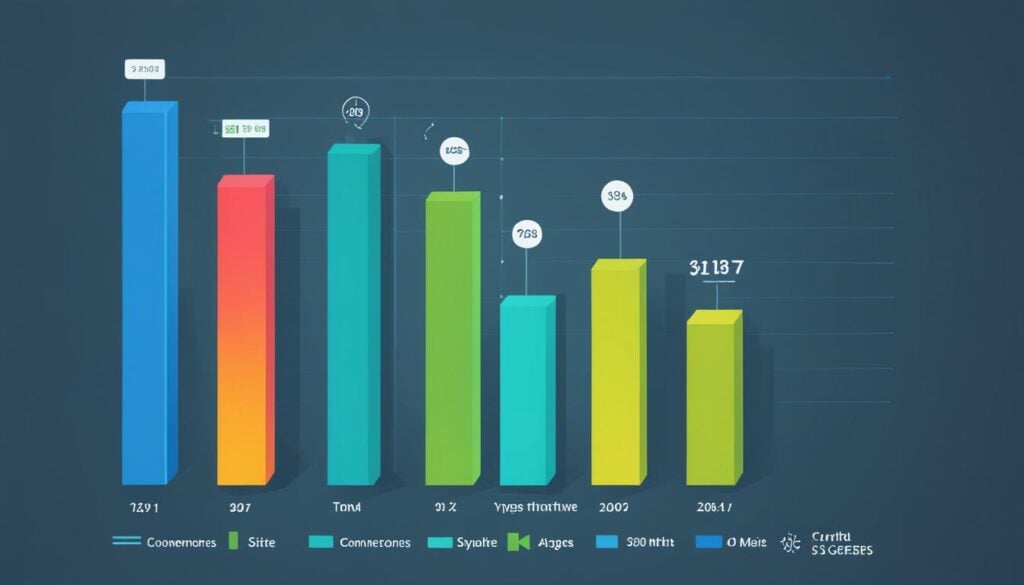
When determining goals and KPIs, it’s important to align them with your agency’s website growth objectives. Consider what you want to achieve through your SEO efforts, whether it’s increasing website traffic, improving conversion rates, or enhancing online visibility. By setting specific and measurable goals, you’ll have a benchmark to track your progress against and ensure that your SEO strategy is contributing to the overall growth of your website.
Build Customer Personas
Understanding your target audience and creating buyer personas is crucial for developing an effective SEO strategy. By developing detailed profiles of the people you want to attract, you can tailor your strategy to resonate with the right audience.
When building customer personas, it’s important to conduct audience analysis and gather insights from your current customer base. This analysis helps you identify common characteristics, pain points, and motivations of your audience.
Customer profiles allow you to create targeted marketing messages that speak directly to the needs and desires of your ideal customers. By understanding their demographics, behaviors, and preferences, you can craft compelling content that resonates with them.
Marketing segmentation is another important aspect of building customer personas. By dividing your target audience into distinct groups based on shared characteristics, you can create tailored marketing campaigns that address the specific needs of each segment.

Research Competitors’ Strategies
To dominate the market, you need to understand how your direct competitors and indirect competitors are running their SEO strategies. Performing a competitive analysis and tracking their performance using organic search tools can provide valuable insights for improving your own strategy.
Competitive analysis involves studying your direct competitors’ websites, content, backlinks, and overall SEO tactics. It helps you identify their strengths and weaknesses, allowing you to enhance your own SEO efforts. By understanding what works for your competitors, you can optimize your own strategy to gain a competitive edge in the market.
Additionally, analyzing indirect competitors can provide you with fresh ideas and tactics to differentiate your agency in the market. Discovering new SEO opportunities and niches can help you stand out and attract potential customers.
When conducting a competitive analysis, make use of organic search tools like Ahrefs, SEMrush, and Moz to gain insights into your competitors’ keyword rankings, organic traffic, and backlinks. These tools enable you to benchmark your performance against others and identify areas for improvement.
By tracking your competitors’ SEO performance, you can stay updated with their latest strategies and make data-driven decisions to enhance your own SEO efforts. Keep a pulse on their rankings, organic traffic trends, content engagement, and social media presence to constantly refine your approach.
Remember, competitive analysis is an ongoing process. Refine your strategy as you learn from your competitors and adapt to changes in the market. Continuously monitoring and analyzing competitor performance will help you stay ahead of the game and drive your agency’s success.

Keyword Strategy
A successful SEO strategy relies on a well-thought-out keyword strategy. While short-tail keywords still hold value, it is essential for agencies to prioritize long-tail keywords that align with their buyer personas and target audience.
By conducting thorough keyword research, agencies can uncover the specific words and phrases that their audience is using to search for relevant information.
This research enables agencies to understand user search intent and create content that precisely targets their audience’s needs. By addressing their audience’s specific problems and providing tailored solutions, agencies can establish themselves as trusted authorities.
Short-Tail Keywords vs. Long-Tail Keywords
Short-tail keywords typically consist of one or two words and have higher search volumes. While they can attract a large volume of traffic, they often lack specificity and may not align with user search intent as precisely as long-tail keywords.
Long-tail keywords, on the other hand, contain three or more words and are more specific. They have lower search volumes but tend to attract highly targeted traffic. By leveraging long-tail keywords that resonate with their target audience, agencies can optimize their content to meet user search intent.
Content Targeting and User Search Intent
When implementing a keyword strategy, agencies should focus on content targeting. This involves tailoring their content to match the search intent of their target audience. By aligning their content with user search intent, agencies can create a seamless user experience and increase the chance of conversions.
It’s important to remember that user search intent goes beyond the specific keywords used in a search. Agencies must aim to understand the underlying motivations and interests of their target audience in order to create content that truly resonates.
Overall, a well-crafted keyword strategy that incorporates long-tail keywords, aligns with user search intent, and targets specific content can greatly enhance an agency’s SEO efforts and drive valuable organic traffic to their website.
Create Blogs and Landing Pages
Creating both blogs and landing pages is a crucial part of your SEO strategy. Blogs are designed to attract users in the discovery phase, providing valuable content that addresses their questions and interests. On the other hand, landing pages focus on driving conversions by presenting targeted offers and capturing user information.
Engage Your Audience with Blogging
Blogging is an effective way to engage your audience and showcase your expertise in the industry. By creating high-quality, informative blog posts, you can capture users’ attention and keep them coming back for more. Be sure to optimize your blog content with relevant keywords to improve its visibility on search engines. Encourage user engagement by incorporating compelling visuals like images, videos, and infographics.
Drive Conversions with Landing Pages
Landing pages play a crucial role in converting users into customers. These pages are strategically designed to guide users towards a specific action, such as signing up for a newsletter, downloading an ebook, or making a purchase. Optimize your landing pages by aligning their content with the user intent and including clear call-to-action buttons that drive conversions. A visually appealing and user-friendly design will enhance the overall user experience and increase the likelihood of conversion.
By creating both engaging blog posts and effective landing pages, you can provide valuable content that fulfills different types of user intent. This approach not only drives traffic to your site but also increases user engagement and boosts your SEO performance.
Conclusion
A well-executed SEO strategy is crucial for the success of your agency. By focusing on relevant, long-tail keywords, creating high-quality content, optimizing your website for load time and user experience, conducting thorough keyword research, and building strong links, you can greatly improve your search rankings and drive valuable traffic to your site.
Remember, effective SEO is an ongoing process that requires continuous monitoring and adjustments to stay ahead in the competitive landscape. Regularly analyze your SEO strategy’s performance, track key metrics, and make necessary refinements to ensure you are maximizing your online visibility and attracting the right audience.
By optimizing your website, delivering a seamless user experience, providing valuable content that aligns with user intent, and utilizing ethical and effective link building techniques, you can establish yourself as an authority in your industry and consistently attract organic traffic that converts into long-term success for your agency.
FAQ
Q: What is an SEO marketing strategy?
A: An SEO marketing strategy is a plan for optimizing a website for search engine optimization. It helps improve search rankings, organic traffic, and organic conversions. The strategy focuses on relevant, long-tail keywords, in-depth site content, fast-loading website, user-focused design, responsive design, voice search optimization, local SEO, and SEO analytics.
Q: Why are relevant, long-tail keywords important?
A: To rank in relevant search results, agencies need to focus on relevant, long-tail keywords. These keywords contain three or more words and help identify the search intent of users. Conducting keyword research using tools like Buzzsumo or KeywordsFX can help agencies find the right long-tail keywords for their SEO strategy.
Q: How does in-depth, quality site content impact SEO success?
A: Creating in-depth, quality content is essential for SEO success. It helps establish the agency as an authority and drive valuable traffic to the site. Agencies should focus on topics related to their industry, use keyword research to target the right audience, and use a variety of content formats like videos, blogs, infographics, articles, and ebooks.
Q: Why is a fast-loading website important for SEO?
A: An agency’s website should load in three seconds or less to provide a good user experience. A fast-loading website reduces the bounce rate and improves SEO rankings. Using tools like Google PageSpeed Insights can help evaluate and improve a website’s load time.
Q: How does user-focused design impact SEO success?
A: User-focused design is crucial for SEO success. A well-designed website with easy navigation, clear headers, and visual elements like images, graphics, and videos enhances the user experience. These design elements keep the audience engaged and increase the dwell time on the site.
Q: Why is responsive design important for SEO?
A: Responsive design ensures that a website adapts to different devices, providing a positive user experience. As users access websites from various devices, agencies need to ensure their website loads correctly on smartphones, tablets, and desktop computers.
Q: How does SEO analytics help in tracking SEO success?
A: SEO analytics is essential for tracking the success of an agency’s SEO strategy. Agencies should set clear goals and key performance indicators (KPIs) and measure and analyze metrics like traffic, impressions, rankings, MQLS, SQLS, using tools like Google Analytics and Ahrefs.
Q: Why is it important to determine goals and KPIs for an SEO strategy?
A: To start an effective SEO strategy, agencies need to determine clear goals and key performance indicators (KPIs). This helps everyone involved understand the direction and progress of the campaign. Goals and KPIs should be measurable and align with the agency’s website growth objectives.
Q: How does building customer personas help in an SEO strategy?
A: Understanding the target audience and creating buyer personas is crucial for an effective SEO strategy. Agencies should develop profiles of the people they want to attract and tailor their strategy to attract the right audience. Analyzing the current customer base can provide valuable insights for creating customer personas.
Q: Why should agencies research competitors’ strategies for SEO?
A: To dominate the market, agencies need to understand how their direct competitors and indirect competitors are running their SEO strategies. Analyzing competitors’ strategies and tracking their performance using organic search tools can provide valuable insights for improving their own strategy.
Q: What is the importance of a keyword strategy in SEO?
A: Keyword strategy is crucial for SEO success. While short-tail keywords are still important, agencies should focus on long-tail keywords that align with their buyer personas and target audience. The strategy should aim to send the audience down the funnel and provide solutions to their specific problems.
Q: Why is it important to create both blogs and landing pages for SEO?
A: Creating both blogs and landing pages is essential for SEO success. Blogs target users in the discovery phase, while landing pages focus on driving conversions. By providing valuable content and fulfilling different types of user intent, agencies can engage their audience and drive traffic to their site.
Q: What are the key components of an effective SEO strategy for agencies?
A: A well-executed SEO strategy is essential for agency success. By focusing on relevant, long-tail keywords, creating high-quality content, optimizing website load time and user experience, conducting keyword research, and building links, agencies can improve their search rankings and drive valuable traffic to their site. Effective SEO requires continuous monitoring and adjustments to stay ahead in the competitive landscape.
Source Links
- https://govisually.com/blog/seo-for-creative-agencies/
- https://www.forbes.com/sites/forbesagencycouncil/2023/04/04/8-simple-steps-for-an-effective-seo-strategy-in-2023/?sh=e05d8a25250d
- https://www.webfx.com/blog/seo/seo-marketing-strategy/
