

As you set your sights on the future of your business, understanding and harnessing the power of B2B marketing automation strategies will be essential. With the advent of innovative automation tools, the business world is experiencing a seismic shift, much like a self-driving car transforming the driving experience. In the fast-moving year of 2024, these tools are not just convenient—they are fundamental in achieving your marketing objectives with precision and efficiency. As you integrate these potent solutions into your 2024 marketing strategies, your focus should be to enhance customer engagement, streamline operations, and stay ahead of the curve in a rapidly evolving digital landscape.
Key Takeaways
- Mastering marketing automation is integral to navigating the complexities of B2B engagements in 2024.
- Meticulous integration of automation tools can significantly elevate efficiency and customer service.
- 2024 marketing strategies empowered by automation are expected to transform the reach and relevance of your messaging.
- In-depth knowledge of your audience, enabled by automation, will drive more targeted and effective campaigns.
- Investing in automation positions you to better analyze data and optimize strategies for superior outcomes.
Understanding the Core of B2B Marketing Automation
Delving into the world of business-to-business commerce, you recognize the pivotal role of B2B marketing automation. As a technique that brings both sophistication and simplicity to your marketing strategies, it serves as a backbone to modern business growth and customer connections. As we explore this crucial aspect of B2B marketing, let’s define its scope, unwrap its multitude of benefits, and shine a light on the software that powers this digital revolution.

Defining Marketing Automation in the B2B Realm
In the B2B realm, marketing automation represents a strategic alliance with technology, allowing you to automate mundane yet necessary marketing tasks. This goes beyond mere email campaigns; it encompasses a holistic approach toward nurturing leads and engaging customers. With the implementation of these specialized software tools, your business can deploy resources more judiciously, positioning itself at the forefront of innovation and customer engagement.
The Advantages of Automation for B2B Marketers
Your journey in B2B marketing efficiency is marked by the myriad advantages that automation offers. Picture enhanced engagement capabilities enabling you to meet your customers on their terms, offering personalized, timely, and relevant interactions. Automation fortifies your marketing strategy, allowing you to concentrate on crafting messages that resonate and foster loyal business relationships, all while reducing the manual effort involved in repetitive tasks.
Marketing Automation Software: The Engine of Efficiency
Akin to an engine propelling a vehicle forward, marketing automation software drives the efficiency of your B2B marketing operations. This invaluable tool systematically executes campaigns, processes data, and delivers insights that inform and enhance every touchpoint along the customer journey. It’s your assistant, your analyst, and your ambassador, all rolled into one, working tirelessly behind the scenes to ensure your business not only meets but exceeds market demands.
- Accelerates repetitive task completion
- Enhances customer experience through precise, automated communications
- Solidifies your status as an industry leader with consistent marketing content
Strategic Implementation of Email Marketing Automation
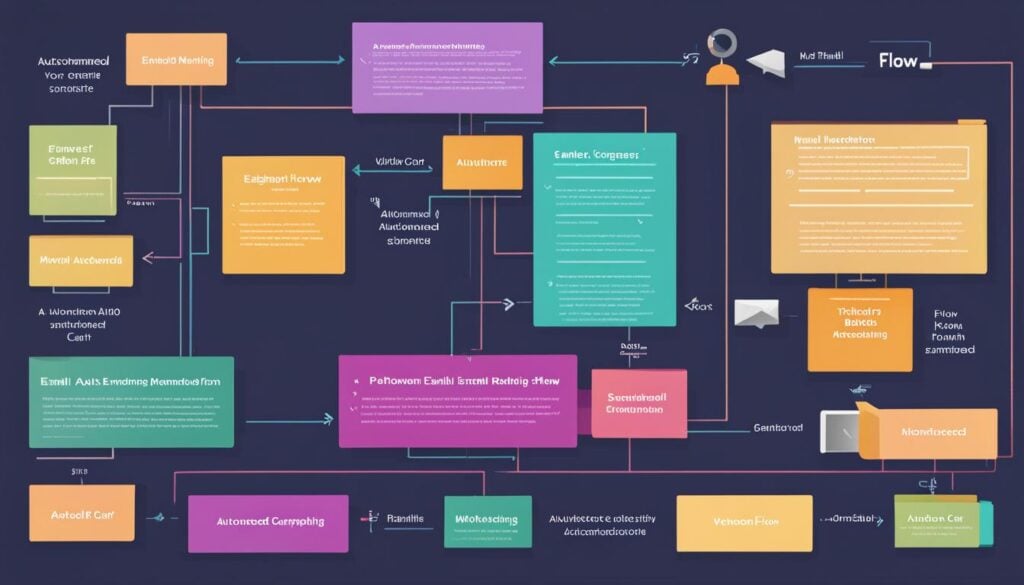
As we venture into the intricate world of B2B marketing in 2024, the strategic use of email marketing automation stands as a beacon for businesses seeking to forge stronger connections with their audience. The ability to send personalized content, automate interactions, and craft sustained communication with your prospects through targeted campaigns is transforming the way companies engage in lead generation and B2B content marketing. Let’s take a closer look at how automation can magnify the impact of your email campaigns.
Personalizing B2B Email Campaigns Through Automation
In today’s digital marketplace, personalization is the cornerstone of effective email marketing. With automation, you’re poised to deliver tailored messages that resonate with the individual needs and interests of B2B buyers. This means creating a unique and relevant experience for each prospect, vastly improving the chances of your emails being opened, read, and acted upon. The power to customize content based on a customer’s previous interactions and preferences is a game-changer, paving the way for deeper engagement and fostering lasting business relationships.
Maximizing Lead Nurturing with Automated Drip Campaigns
Drip campaigns are essential for nurturing leads in the B2B sector, guiding them through every stage of the customer journey with precision and relevance. By automating this process, you ensure that no lead is left behind, consistently providing value through a series of targeted emails. This not only keeps your company top-of-mind but also educates and prepares your prospects for the moment when they’re ready to make purchasing decisions. Automated drip campaigns represent a tactical approach to lead nurturing that can significantly amplify your conversion rates.
Tailoring Email Workflows to Prospect Behaviors
The dynamic nature of prospect interactions requires a nimble and responsive marketing strategy. By tailoring email workflows to prospect behaviors, you’re able to trigger the right communications at the most opportune moments. Automation facilitates this responsiveness, allowing you to set up workflows that react instantaneously to actions like email opens, website visits, or content downloads. This level of customization ensures that every prospect feels understood and valued, significantly boosting the potential for positive engagements and sales outcomes.
Leveraging Data for Smarter B2B Marketing Automation Strategies
Embarking on the path of B2B marketing automation, you’re not just collecting data; you are capturing insights essential to drive effective decisions. In the era where data-driven decisions play a crucial role in shaping marketing strategies, employing tools that facilitate the seamless exchange of information between sales, marketing, and customer service becomes a prerequisite for success.
Imagine a scenario where the intricacies of lead generation are managed not by guesswork, but through actionable, timely data that inform every step of your campaign strategies. Integration platforms like Zapier act as conduits for this essential data flow, ensuring that your data isn’t just comprehensive but is strategically aligned with every faction of your enterprise.
-
Use Zapier to connect tools across your business ecosystem, ensuring that data from customer interactions, sale progress, and marketing campaigns reside in one accessible repository.
-
Implement automated reporting solutions such as Power My Analytics and Google Looker Studio to gain ongoing, real-time insights into the health of your campaigns and the effectiveness of your website—an approach that turns raw data into a clear narrative steering your B2B marketing strategies forward.
With marketing automation, you’re not only streamlining operations but also elevating your strategy with insights gained from a comprehensive look at every digital footprint. Real-time monitoring and evaluation of campaign performance empower you to make pivot decisively, backing every choice with data that underscores your strategy’s direction and expected outcomes.
-
Understand your audience deeply through data analysis, enabling more precise targeting and personalization—cornerstones of lead generation success.
-
Define the metrics that matter, utilizing data to refine marketing automation processes, always optimizing for greater lead conversion and customer retention.
-
Ensure your teams are making data-driven decisions that resonate with market trends and audience preferences, setting a standard for excellence in B2B marketing.
The harnessing of data through marketing automation is not just about operational efficiency; it’s about constructing a marketing strategy that’s intelligent, responsive, and ultimately, more human. As you align your goals with the capabilities of automation tools, you create a competitive edge that is both scalable and sustainable as you move through 2024 and beyond.
B2B Marketing Automation Strategies for Enhanced Customer Experience
In today’s rapidly evolving B2B landscape, crafting an exceptional customer experience is paramount, and marketing automation strategies are at the heart of this transformation. By utilizing customer relationship management (CRM) systems and automated workflows, businesses are not only simplifying interactions but are enhancing their customer relationships with personalized, relevant communications across multiple channels.

Let’s delve into the specifics of leveraging these cutting-edge tools to sharpen your customer experience strategy.
Automated Customer Service Touchpoints
As you streamline your customer service, automated touchpoints created by intelligent systems hold the key to increased satisfaction and engagement. From automated ticketing systems to chatbots and AI-driven helpdesk solutions, your ability to respond to customer queries quickly and effectively marks the cornerstone of stellar customer experience. Seamless integration of these tools within your CRM platform ensures that no customer query falls through the cracks, driving loyalty and trust in your brand.
Synchronizing Multi-Channel Communication
Your customers are everywhere and so should be your messages. Through multi-channel marketing, you can synchronize your communications across emails, social media platforms, and even SMS, ensuring your brand’s presence is felt consistently across all touchpoints. The secret lies in a robust automation platform that can deliver this brand consistency, making each customer interaction more personalized and impactful, ultimately enhancing the overall customer experience.
Onboarding and Retention via Automated Workflows
The first impression matters, and automated workflows ensure that your onboarding process is not just informative but also intuitive and welcoming. By automating key onboarding steps, you guarantee that new customers receive timely guidance, understand the value proposition of your offerings, and feel valued right from the start. This proactive approach lays a strong foundation for customer retention, cementing a productive and long-term relationship with your audience.
Incorporating these strategies into your B2B marketing efforts will not just meet but exceed customer expectations, diversifying your touchpoints and reinforcing your commitment to elevating the customer experience with each interaction in 2024 and beyond.
Bolstering Lead Generation with Automation Tools
As you refine your B2B marketing strategies, the implications of integrating sophisticated automation tools cannot be overstated. With the vast landscape of digital interactions, these tools stand as lighthouses, piercing through the data to illuminate promising leads, heightening conversion rates, and providing a framework for scalable lead generation campaigns.

In the bustling world of B2B interactions, your ability to capitalize on user behavior data is crucial. Lead scoring, a dynamic feature of many automation platforms, offers unparalleled insights by monitoring and evaluating the digital footprints left by potential leads. Actions such as page visits, resource downloads, and demo requests are meticulously tracked and scored. This deep level of analytics affords you the power to distinguish casual browsers from those signifying a strong intent to engage further with your brand.
-
Strategically deploy lead generation tools to automate the scoring process, enabling you to quickly identify and prioritize high-value leads that showcase increased engagement and readiness to convert.
-
Monitor and analyze key customer interactions to tailor your follow-up strategies effectively, nurturing these leads with precision and increasing the efficacy of your marketing efforts.
The agility of automation tools extends to optimizing your campaign performance as well. A careful analysis of lead sources, enabled by automation, allows you to reallocate resources and fine-tune your marketing endeavors for maximum impact. In this data-rich environment, every decision you make is informed, strategic, and designed to bolster conversion rates.
-
Utilize B2B Marketing Automation Strategies to streamline your campaign analysis, making adjustments in real time to accommodate evolving market trends and customer behavior patterns.
-
Implement automation tools that provide comprehensive insights into campaign performance, helping you to enhance your strategies and maximize ROI.
Leveraging automation tools thus not only simplifies your marketing operations but significantly powers your lead generation engine—fueling a robust, data-driven strategy that stands the test of an ever-fluctuating market environment.
Amplifying Content Marketing with B2B Automation
In the current digital epoch, your prowess in content marketing can define the success of your B2B marketing endeavors. The intelligent application of marketing automation tools turbocharges the reach and precision of your content strategies, creating an orchestrated tapestry of engagement across your customer’s journey. Let’s unpack how automation serves as the growth hormone for your content marketing muscle, pushing the boundaries of conventional outreach and fostering an environment where your content works tirelessly on your behalf.
Content Personalization and Delivery Efficiency
Imagine addressing hundreds of leads with messages that resonate with them individually. Marketing automation affords you the scalability to craft personalized content marketing experiences tailored to the preference and behavior of each lead, improving engagement and nurturing relationships. By optimizing content delivery with automation, your marketing materials reach your audience not only at the right time but in a manner that amplifies its relevance, fostering a sense of one-to-one communication that B2B marketing thrives on.
Automated Content Distribution Across Multiple Platforms
Your digital presence sprawls across numerous platforms, and unifying your message can be a daunting challenge. Automated content distribution deftly manages the intricacies of multi-platform messaging, ensuring that your valuable content reaches your audience wherever they are, without fail. Employing these robust automation systems, you guarantee consistent branding and strategic timing, amplifying the collective impact of each piece of content as it harmonizes into a unified marketing symphony.
Using Automation to Scale Content Marketing Initiatives
As your business scales, so should your marketing efforts, but how can you sustain this without diluting quality or straining resources? The answer lies in marketing automation. With frameworks designed to bear the weight of expansive marketing campaigns, your marketing automation setup not only distributes but also analyzes the performance of your content, allowing you to make data-driven decisions. This scalability transforms your approach from being merely reactive to proactive, placing you as the thought leader in your industry.
Embrace these automated pathways to sharpen your content marketing precision, extend your brand’s digital footprint, and secure the competitive edge that is quintessential in today’s B2B marketplace.
Advanced Segmentation and Targeting Techniques
In the landscape of B2B Marketing Automation Strategies, advanced segmentation and targeting stand out as crucial elements for driving success. Your ability to segment effectively lays the groundwork for crafting personalized and targeted messaging that resonates with your audience. With the right tools and approaches, the art of dividing your customer base into meaningful groups becomes a strategic powerhouse in delivering content that hits the mark every time.
To leverage these techniques, let’s explore how to apply segmentation and profiling within your marketing campaigns:
- Initiate by analyzing customer data to identify patterns and common characteristics. This deep dive into your audience’s behavior, needs, and preferences is the essence of effective profiling, enabling you to mold your targeted messaging with laser precision.
- Utilize marketing automation tools to categorize your audience into segments based on gathered intelligence such as lead source, interaction history, and engagement level. The segmentation process is not just about dividing lists but about understanding the unique narratives of different audience segments.
- Develop targeted messaging strategies tailor-made for each segment. This is where the true power of B2B Marketing Automation Strategies shines, ensuring that every email, ad, or social media campaign speaks directly to the needs and interests of its intended audience.
- Implement account-based marketing campaigns that speak directly to high-value prospects. By focusing on key accounts with messages that address specific needs and pain points, you enhance the likelihood of conversion through heightened relevance.
Through the judicious use of segmentation and profiling, you position your marketing initiatives at a vantage point. It allows you to send the right message, to the right people, at the right time, elevating the sophistication and effectiveness of your automated marketing approaches.
- Measure and adjust your tactics in real-time. With the data analytics capabilities of modern B2B marketing automation platforms, track the success of your segmented campaigns and iterate quickly to optimize outcomes.
- Foster continuous improvement by regularly refining your segmentation and profiling parameters. As market dynamics shift, so do the characteristics and behavior of your audience. Stay ahead by adjusting segmentation strategies accordingly.
Ultimately, by mastering these advanced segmentation and targeting techniques, you can ensure that your B2B Marketing Automation Strategies are not only efficient but also strike a chord with your audience, paving the way for more meaningful interactions and solidifying the path to a robust marketing ROI.
Fostering Alignment Between Sales and Marketing Departments
To navigate the complex landscape of B2B commerce with agility and finesse, it’s crucial for your sales and marketing departments to move in concert. Marketing automation emerges as a strategic enabler, fostering alignment and ensuring your teams work with a unified purpose. By sharing data cross-departmentally, automating the handoff of qualified leads, and maintaining brand consistency, you create a symphony of collaborative efforts that is melodious for both the company and the customers.
Cross-Departmental Data Sharing for Cohesive Strategies
Imagine the power your teams can harness when they work with shared insights and data. Cross-departmental collaboration is significantly fortified when marketing automation tools are leveraged to enhance transparency and speed in communication. This not only cultivates a unified team strategy but it also deepens the understanding each department has of the other’s challenges and objectives. The sharing of key metrics, analytics, and results between sales and marketing is pivotal to constructing cohesive strategies that hold accountable to the mutual goals of your organization.
Automating Lead Handoff from Marketing to Sales
The transition of leads from marketing to sales is often where potential is lost, but with marketing automation, this doesn’t have to be your narrative. Automate the lead handoff process to pass over the baton of qualified leads seamlessly to your sales team. This strategic move ensures that the leads nurtured by your marketing efforts are promptly and adequately engaged by sales, thus decreasing the chances of missed opportunities and increasing the speed of conversion.
Ensuring Consistent Brand Messaging Across Teams
With multiple teams communicating with the same customers, brand consistency is vital in delivering a unified message that strengthens customer trust and brand integrity. This is where marketing automation plays a pivotal role, by setting the standard for brand messaging and reinforcing it across all customer touchpoints. Whether it’s sales decks, marketing collateral, or customer service scripts, ensuring each communication reflects your brand’s ethos contributes to a coherent and compelling customer journey.
By embracing these automation strategies, you’re not just optimizing your marketing efforts; you’re architecting a resilient framework where sales and marketing alignment serves as the bedrock for business growth and customer satisfaction. The synergy created by these aligned departments propels your organization towards a future that’s efficient, productive, and above all, customer-centric.
Metrics and KPIs for Measuring Marketing Automation Success
As marketing automation becomes an integral part of your B2B strategies, knowing how to measure its success is essential. By carefully selecting and tracking certain metrics and KPIs, you gain the ability to scrutinize the effectiveness of your marketing automation efforts and see where they truly stand. It’s all about understanding the return on your investment and the impact of your dedicated resources on your overarching marketing goals.
Key Performance Indicators to Track Automation Impact
To truly evaluate the influence of marketing automation on your campaigns, you need to keep an eye on various leading indicators. These KPIs often include:
- Engagement levels, such as email open rates and click-through rates, to gauge interest and interaction
- Conversion rates, monitoring how many leads are transformed into customers
- Lead quality, assessing how well your automation is attracting the right kind of prospects
- Customer lifecycle metrics, examining how automation affects customer retention and loyalty
Tracking these KPIs enables you to comprehend the potency of your automated campaigns, be it through an increased lead volume or enhanced customer journeys—both critical markers of successful marketing automation.
Benchmarking Success Through Analytics and Reporting Tools
Analytical and reporting tools provide a wealth of information to help you benchmark your marketing automation success. Platforms like Google Analytics and Adobe Analytics offer deep dives into user behavior, while CRM systems report on sales conversions directly tied to marketing initiatives. By benchmarking success, you can:
- Compare current campaign performances against historical data to spot trends or drops in efficiency.
- Identify which tactics are performing well and which may need to be reevaluated or replaced.
- Understand how your marketing automation ROI stacks up against industry standards or competitors.
The insights gathered through these tools equip you with the necessary information to pivot strategies as needed and drive continual improvement in your marketing automation processes.
Attribution Modeling in the Era of Automation
Attribution modeling has taken on new life in the era of automation. It works to unveil the channels and touchpoints that play pivotal roles in customer conversion paths. By implementing sophisticated attribution models, you can:
- Allocate your marketing budget more effectively by investing in channels with proven impact.
- Refine your understanding of the customer journey, observing how different touchpoints contribute to conversions.
- Uncover insights into multi-channel interactions, optimizing the mix for future campaigns.
Attribution modeling elevates marketing automation from a tactical tool to a strategic powerhouse, providing clarity on where to focus efforts for the most significant impact on your marketing objectives.
Conclusion: The Future of B2B Marketing Lies in Automation
As the marketplace for B2B marketing continues to evolve with the advent of 2024, the deployment of sophisticated automation strategies emerges as the linchpin for businesses striving for marketing excellence. The strategic integration of automated tools not only enhances operational efficiency but also profoundly transforms customer relationships by offering personalized, seamless interactions. This revolution is not confined to the rudiments of marketing; it extends far into the realms of lead generation, customer relationship management, and sales alignment, ultimately creating a cohesive and dynamic marketing ecosystem.
Your anticipation for the future should be met with a steadfast commitment to harnessing automation in every facet of your B2B marketing strategies. It’s the fuel that powers lead generation engines, the glue that binds sales and marketing objectives, and the compass that guides customer interactions. Embracing these tools will not just streamline your workflows; it will enrich them. Leveraging data, fostering personal connections, and adapting to the digital landscape are more than just marketing tactics—they’re the very foundation upon which your 2024 marketing strategies must be built.
For those who adeptly adapt and implement these automation strategies, the rewards will be manifold. Anticipate not only a spike in lead quality and quantity but also a richer, more rewarding customer dialogue maintained with less manual effort. A well-executed automation strategy is a powerful asset that positions your business to reap greater market success, foster meaningful engagement, and bolster ROI. In a world where personalized, efficient customer experiences are the norm, those who anticipate and evolve are the ones who will ascend as B2B marketing leaders of tomorrow.
FAQ
What Are B2B Marketing Automation Strategies?
B2B Marketing Automation Strategies involve using specialized software tools to automate repetitive tasks in a business’s marketing process, enhance marketing efficiency, and improve customer engagement.
How Does Marketing Automation Benefit B2B Marketers?
Marketing automation benefits B2B marketers by streamlining repetitive and time-consuming tasks, improving lead generation, nurturing and scoring, enabling personalized customer communications, and providing data analytics for informed decision-making.
What Type of Software Is Used for Marketing Automation?
Various software platforms are used in marketing automation, such as HubSpot, Marketo, Eloqua, and Pardot. These platforms offer a range of tools for email marketing, lead management, analytics, CRM integration, and more.
Why is Personalization Important in B2B Email Marketing?
Personalization in B2B email marketing is crucial because it allows businesses to deliver relevant and engaging content to prospects, increasing the chances of converting them into customers and building long-term relationships.
How Do Automated Drip Campaigns Enhance Lead Nurturing?
Automated drip campaigns allow for timely and consistent delivery of targeted content to prospects, keeping them engaged and moving through the sales funnel at a steady pace.
Why Is Data Important in B2B Marketing Automation?
Data is essential in B2B marketing automation as it enables marketers to make informed decisions, target campaigns more effectively, measure success, and continuously optimize marketing strategies.
How Does Marketing Automation Improve the Customer Experience?
Marketing Automation improves the customer experience by providing personalized and relevant communications, timely customer service, and seamless interactions across multiple channels.
What Are the Best Practices for Using Automation Tools for Lead Generation?
Best practices include utilizing lead scoring, segmenting audiences to deliver tailored messages, employing targeted content, and using analytics to refine campaigns for better conversion rates.
How Can Content Marketing Be Amplified Through Automation?
Automation can amplify content marketing by personalizing content delivery, scheduling posts across various platforms, and scaling up marketing initiatives efficiently.
What is the Role of Segmentation in Marketing Automation?
Segmentation plays a critical role in marketing automation as it allows businesses to group their audience based on shared characteristics and tailor their marketing efforts to each segment for increased relevance and effectiveness.
How Does Marketing Automation Help Align Sales and Marketing Teams?
Marketing automation facilitates the sharing of leads and data between marketing and sales, ensures consistent messaging, and helps both teams work towards common goals, thus increasing overall organizational efficiency.
What Metrics Should Be Tracked to Measure Marketing Automation Success?
Tracking metrics such as conversion rates, click-through rates, lead quality, customer acquisition costs, and ROI can measure marketing automation success and help in strategy refinement.
